
Diocletian’s Palace is a sprawling network of twisting, turning streets, ruins and basements. Whilst the palace walls house the marbled streets above, below street level are a warren of passages more fitting for a horror set than a palace of wealth.
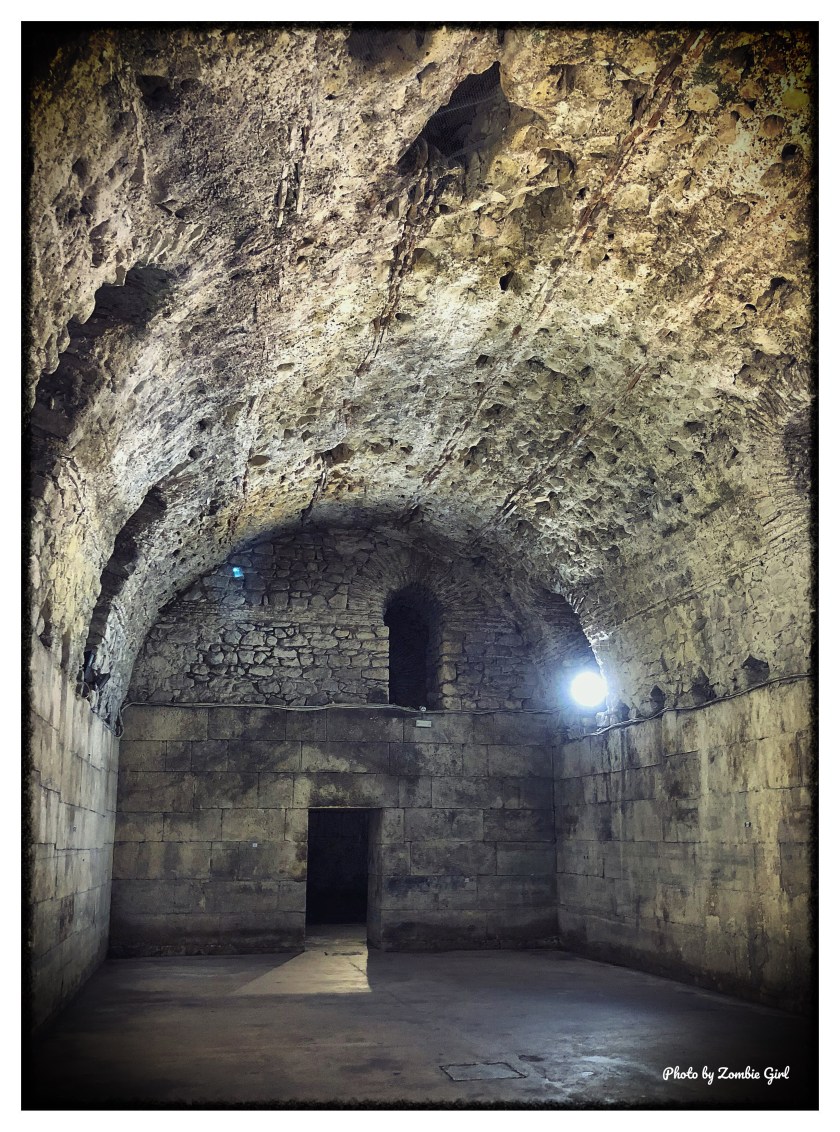
Most famous for their use in Game of Thrones, as a place to keep dragons, the basements have an interesting history.
They have only recently been cleared out and made accessible (some parts are still closed off) following a clean up operation spanning the last 50 years.

Filled with debris, rubbish and rubble over the years from the development works above, the basements had become an inaccessible time capsule, the hallways blocked with remnants of the changes taking place.
Slowly, the basements have been cleared, opening up section by section to the public. We overheard this story from one of the tour guides, her disembodied voice echoing through the underground rooms to where we stood, looking up at one of the huge piles of remaining rubble. It was amazing to think that the high ceilings and pillars had recently been hidden by the things discarded by the people in the city.

Walking through the basements, dimly lit with the sound of water dripping down the walls was a haunting experience, contrasting with the bustle from the markets in the halls above. The only noise echoing though the corridors was the rustle of birds and the slight echoing of other tourist’s footsteps. At least I hope that’s what it was……


 travellingzombie.com