Travel Tip: Get the Tent Out!

Travel tips from http://www.travellingzombie.com

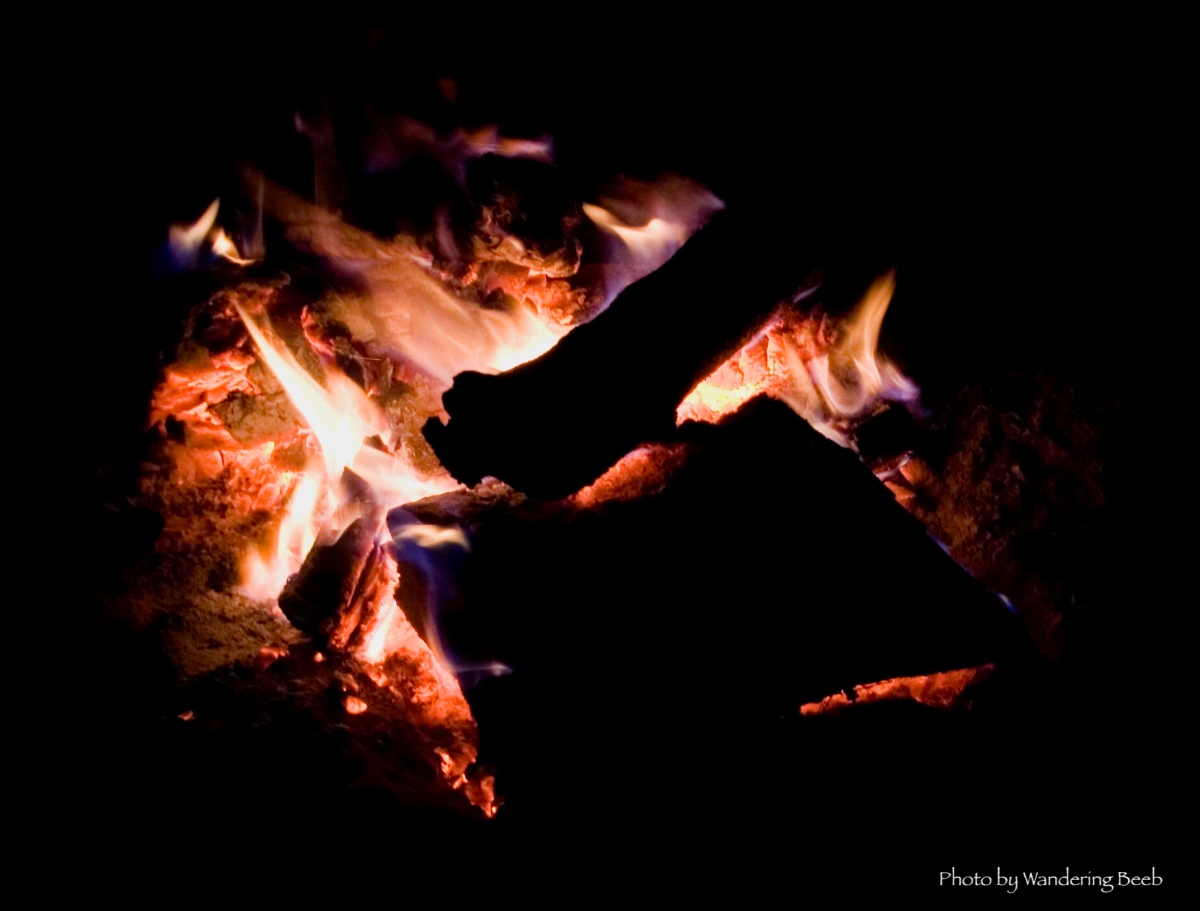
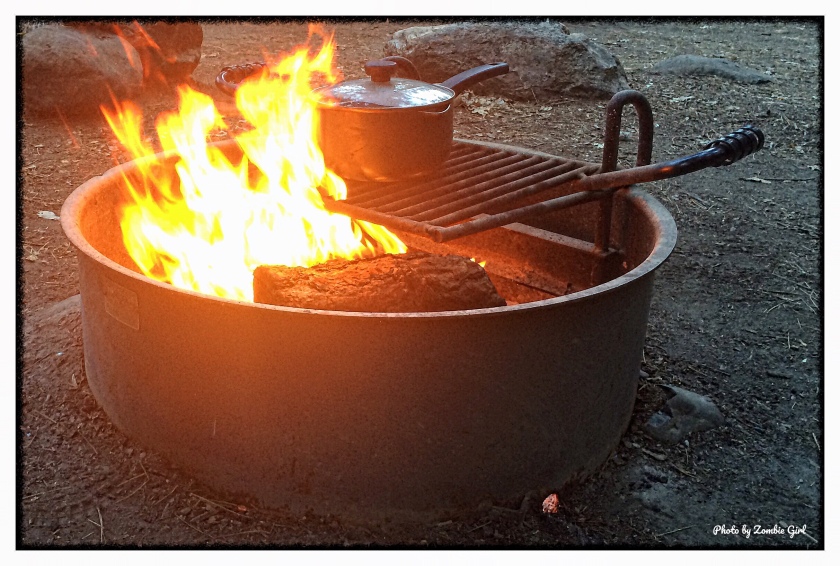
When we first started to travel, I was not a camping fan. I dislike bugs, being cold and mud – so it was no surprise that I’d rather stay in a comfy, warm hotel. However, on our first trip to a National Park in the USA, I was persuaded to give it a go. I’m so glad that I did! It was the best part of our trip, with nights around the campfire firmly cemented in my memory.

One of the main reasons I was happy to give it a go was for the cost. Accommodation is one of the most expensive elements of travelling. Camping can help with that. With pitch costs of around $26 per night in Wawona, Yosemite, camping can cut your accommodation costs in half.
enlight182-1

When we first travelled to Yosemite and Tahoe, we had no clue about what tent to get and we didn’t want to have to pay extra to fly the tent over to our destination. This meant that we visited Kmart on our first day in the USA and, after much deliberation, we ended up buying a tent that was probably more suited to a backyard sleep over than a week or so in a couple of National Parks. Our main selection criteria was that it was big enough for three of us and had a sewn-in ground sheet (I refused to camp of there was a chance that spiders could crawl into my bed – ugh). We also ended up with sleeping bags that were fairly thin, and in one person’s case – didn’t come up past their chest! To be fair, the tent and the sleeping bags did their job – they were cheep and cheerful (we were not going to pay to fly them back to England and so they would be given away at the end of our trip) and they kept us clean and dry, however, they weren’t really designed for the cold nights of Yosemite.

Learning from our first experience, the next time we camped, we purchased a huge four-man tent in the UK and counted this as one of our bags, splitting the rest of our gear between the baggage allowance for the remaining three people in our party. This actually worked out far cheaper and meant that we had a sturdy, well-made tent for our adventures. Although there was lots of room in this tent (we could fit in four large airbeds!), it took four people, a good thirty minutes and the tips of one of my fingers to put up.

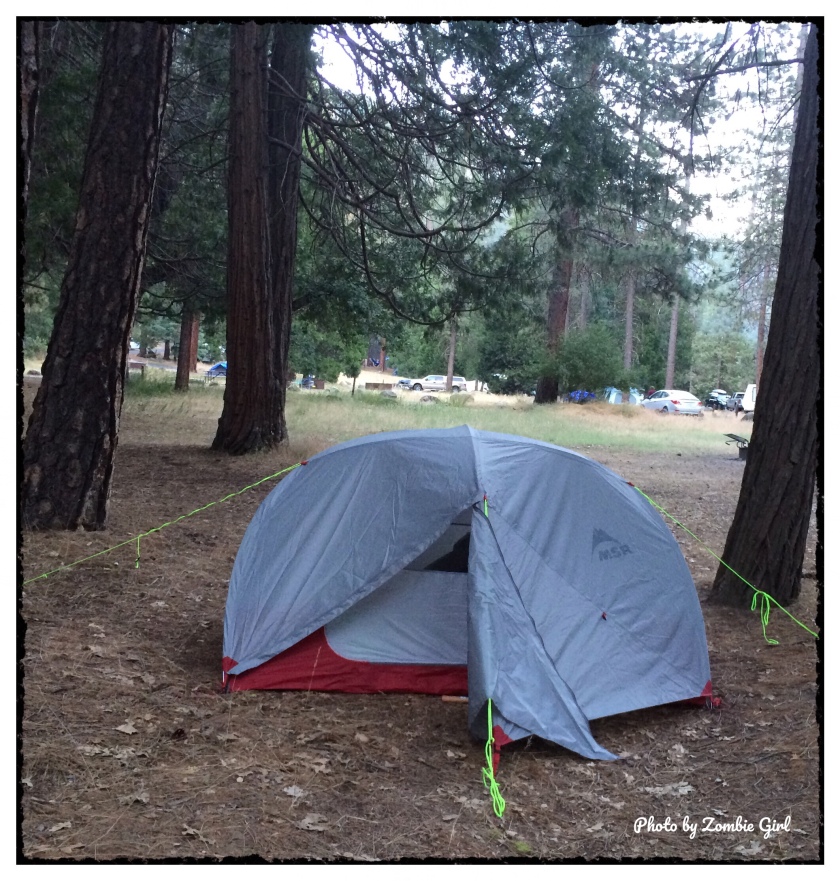
The big tent is great, particularly for camping trips on the UK but it only works out cheaper to take abroad if there are a few of you with whom you can split the luggage. So what do we do if it’s just me and Wandering Beeb? We did a huge amount of research and purchased a much smaller tent. We ended up with a MSR Elixir 3 tent.
enlight181-1

This little tent is a beauty! Firstly, it looks the business – it’s fairly low to the ground and has a curved design, giving you lots of head room whilst feeling really airy. The ground sheet is sewn-in and the two doors are well-sealed to prevent any unwanted visitors or rain getting in. Although there is a two-man version of the tent, we were sensible to go for the three-man option to get a little extra room as it’s a very snug inside. It’s small, geometric design made it really sturdy and it was unbelievably easy to put up. Usually there is a lot of swearing and sore fingers when we camp – not in this case as it’s easy enough for one person to put it up in about 10 minutes – winner!! Even better, as it’s so lightweight and can be split up into two small bags, we were able to fit it in with our usual luggage allowance, meaning that we didn’t incur any extra charges.
enlight183

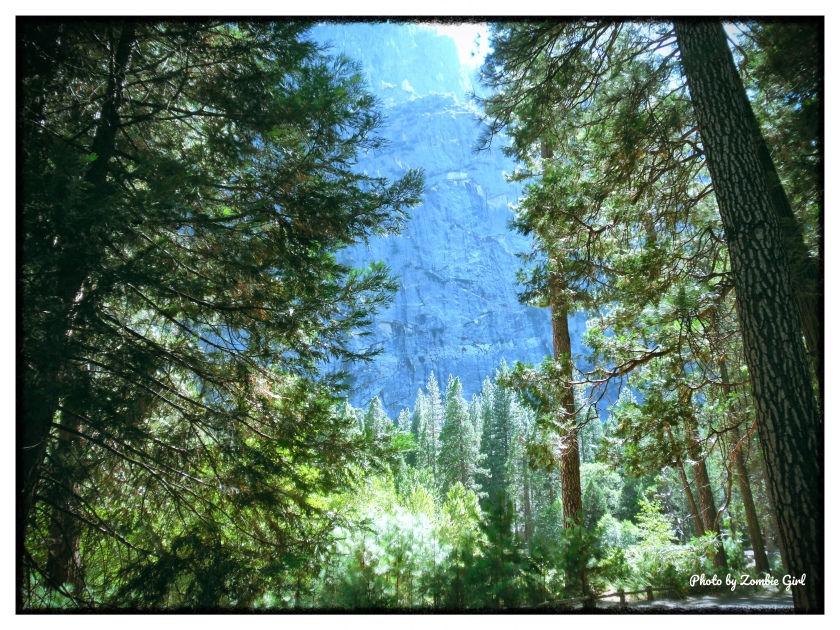
One of the best things about this tent had to be the option to remove the outer layer and look up through the mesh panels at the stars. The Yosemite night sky is one of the most beautiful sights we have ever seen and to be able to look up at the stars from the comfort of our sleeping bags was incredible – something you would absolutely miss out on in a hotel.

As well as incredible sights, camping brings you together as travellers like nothing else. There is something about a good campfire and nights huddled round a torch that bond you in a way nothing else can.

What tent do you use? Any good recommendations? Tell us in the comments! 
We Found Water in a Deserted Place

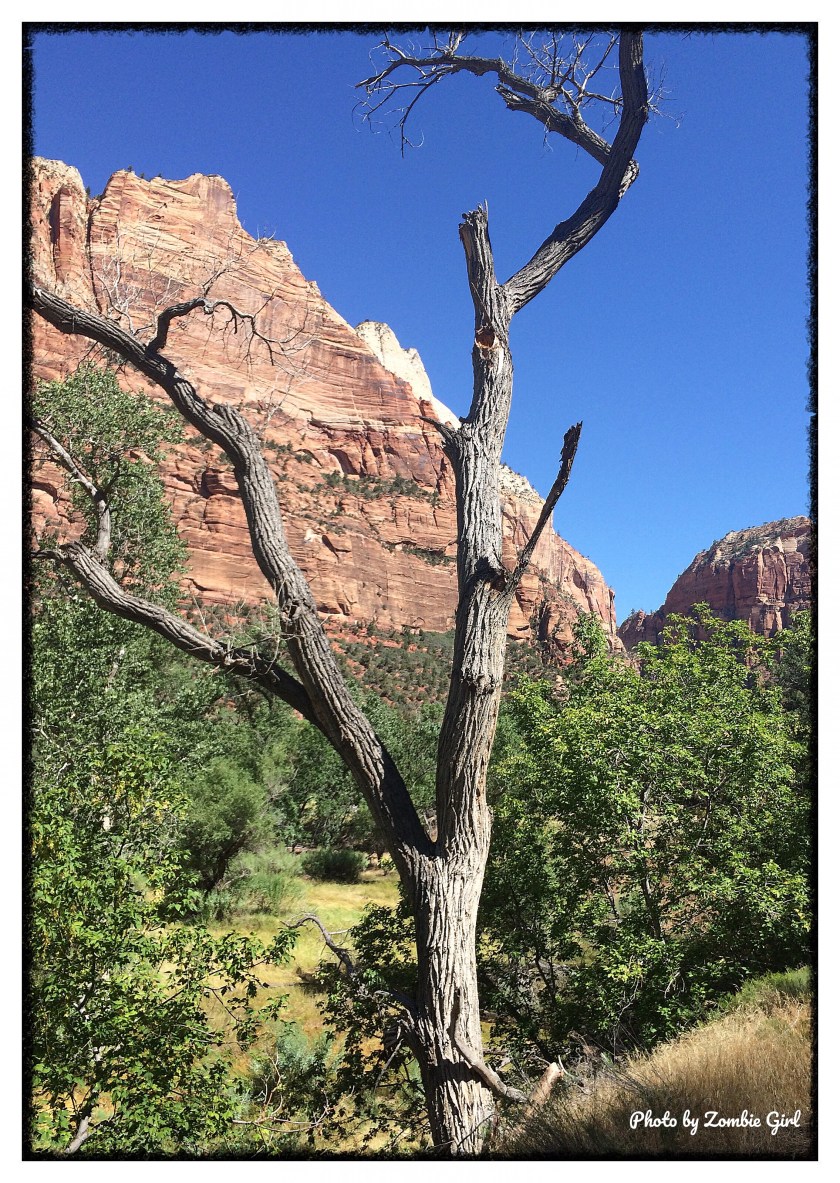
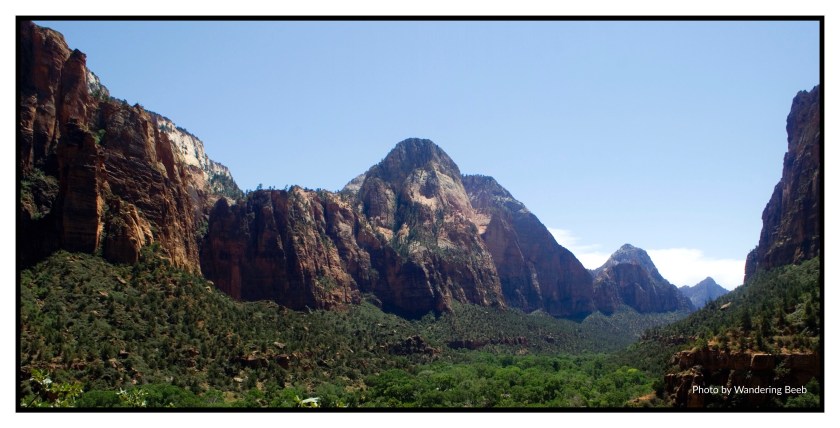
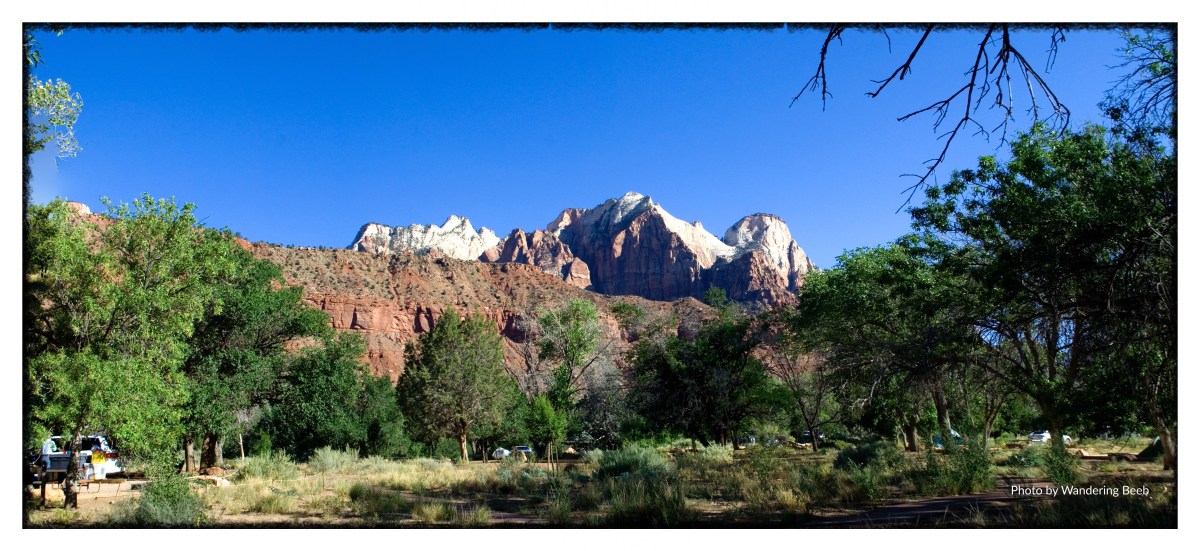
The drive into Zion had been beauty of a different kind compared to our other stops. Twisting roads and reddish rock encased us as we wound our way into the canyon.

Our first stop in Zion was to the Watchman Campground to set up our gear. That was easier said than done. You’d think that as seasoned campers, we would know how it’s done and have everything we need. Nope! What we hadn’t realised was that the campsites in Zion are on a rocky surface, not flat forest ground. This is probably to try and deter critters and ants from seeing the tent as a new home, however it also meant that we had no place to secure our tent pegs. This was our first obstacle, but certainly not our last. Having secured the tent as best we could (think bags and rocks weighing down the corners), two of us set off for the local shop for supplies whilst two stayed behind to work on the tent.

Arriving at the shop, we found it mostly empty. The shopkeeper (almost certainly an extra from some B movie horror) told us ominously that a storm was coming and that we should make sure that we were safely under shelter when it hit. We were a little naive at this point – the skies were still blue and not a drop of rain in sight! We meandered around the shop, picking up supplies and slowly but surely the day started to darken. By the time we left the shop, we were sprinting to the car, soaked through as the rain ran in rivers down the road, filling the storm gulley to the brim.

Meanwhile, back in the tent, the rain was battering the sides, making our temporary home even more precariously weighted down than it was to start with! These floods and high winds hit sporadically throughout the time we were there, often in the middle of the night, leaving us holding on to the tent poles to make sure that we didn’t blow away! They often lasted little more than an hour or so and were in massive contrast to the scorching sunshine we experienced throughout the day. It was actually that hot that our air beds curved with the heat!

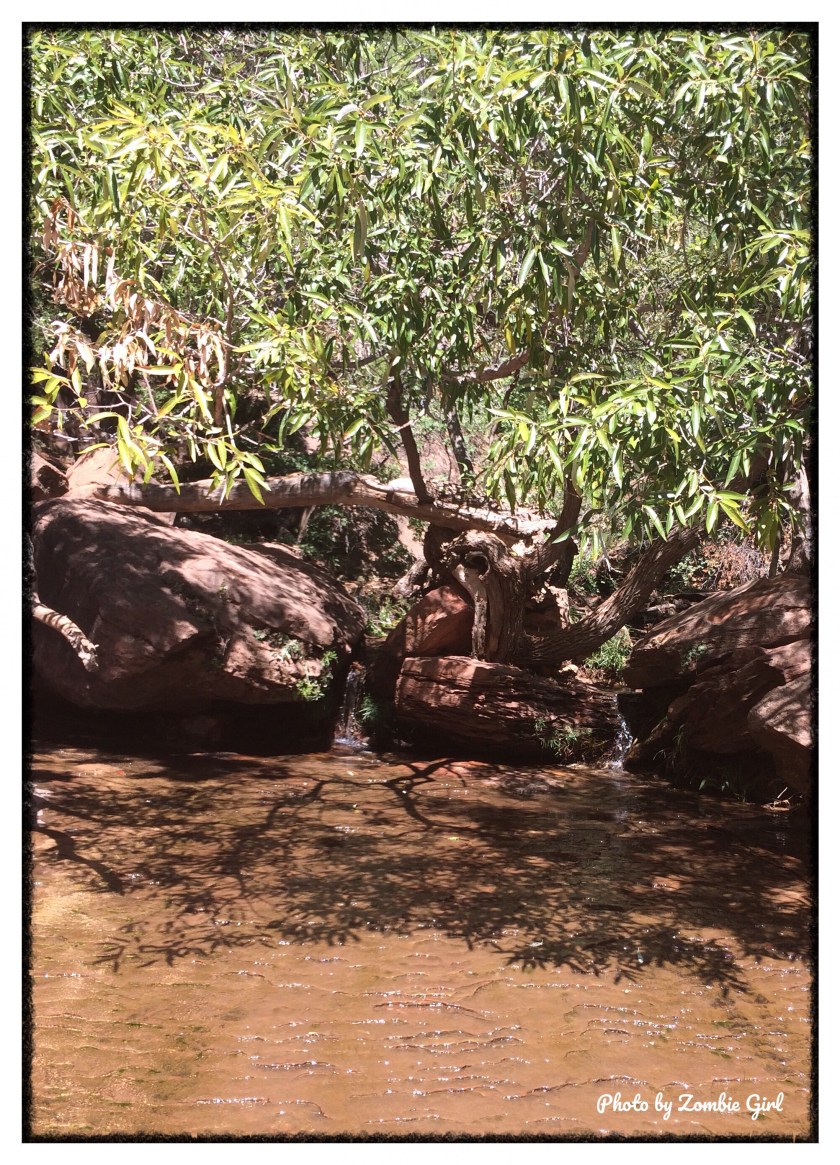
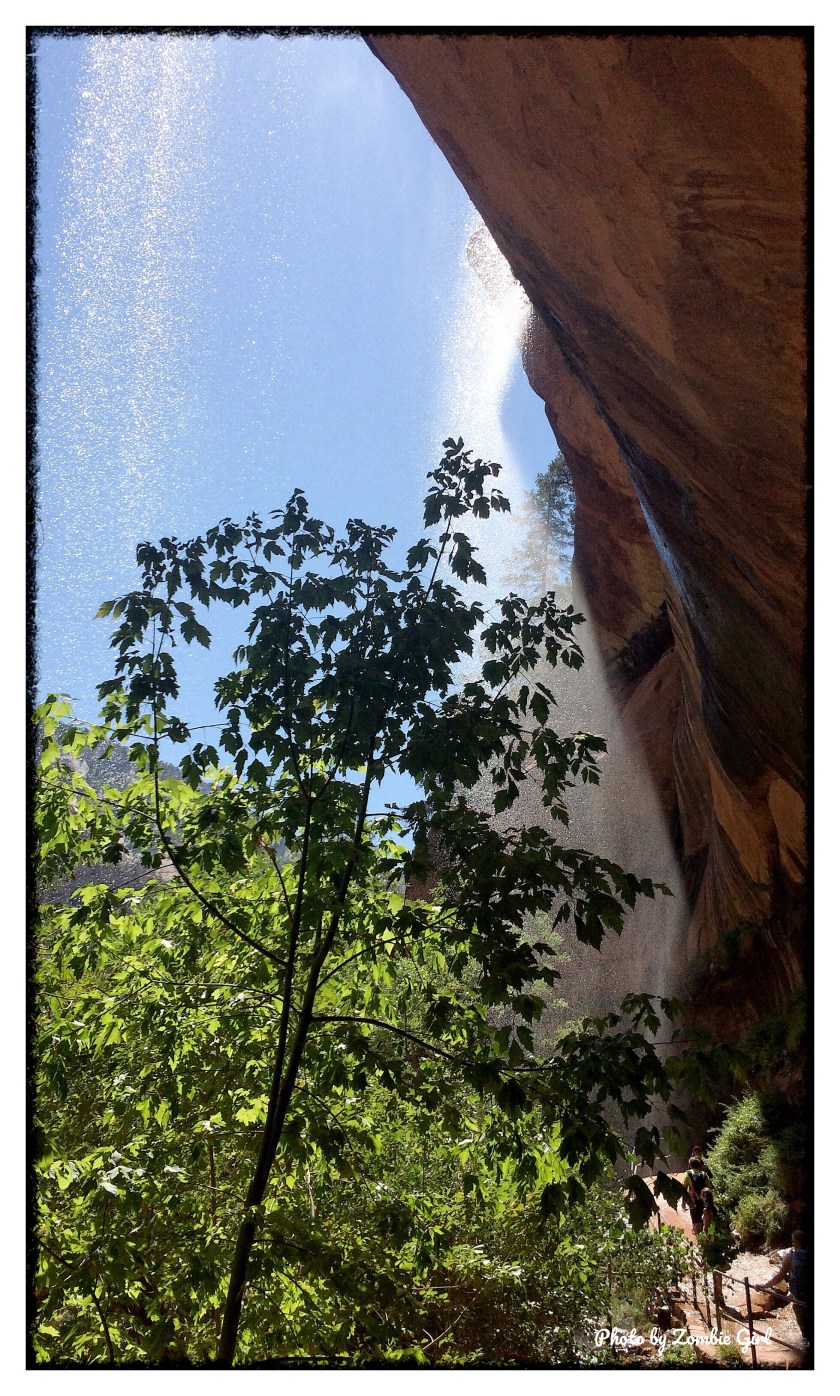
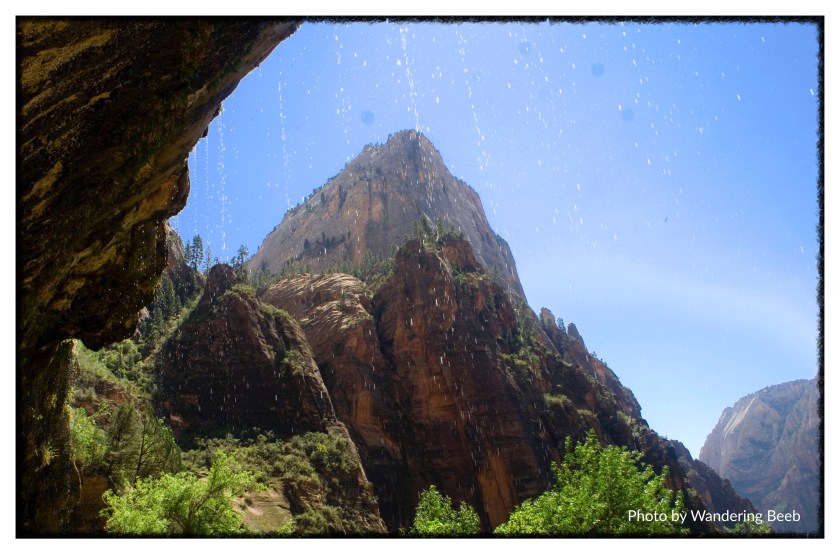
One of our day hikes took us out to the Emerald Pools and waterfalls. You’d think that somewhere like Zion, full of rock and dust, wouldn’t be the best place for waterfalls but you’d be wrong! Upper, Middle and Lower Emerald Pools are all accessible from near the Grotto Picnic area. It was a boiling hot day and although the hike was very warm, it was well worth it for the sights – although the water wasn’t very Emerald in colour on our visit, instead it was coloured a reddish brown from the rock.

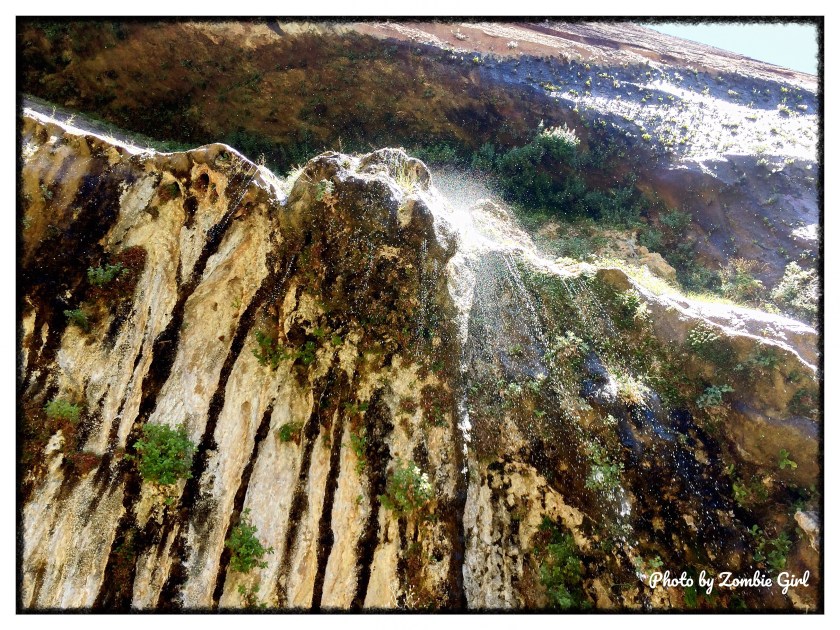
The most exciting part of the hike for me was the trail around Lower Pools which actually lets you walk underneath the waterfall. We went in late summer and so the flow wasn’t too strong, more of a light mist pouring over the ledge above us, dusting us with cool water that was refreshing against the relentless hot sun. I’d imagine that in winter this would be a very different experience! We spent quite a bit of time here, taking in the sights and snapping photos under the waterfall in an awe-filled silence. The various colours of the rock provided an stunning backdrop and there was something otherworldly about being behind the fall of the waterfall.

The pathway past the lower falls curved back on itself, winding upwards towards the Middle Pools which provided a good view of the path of the water as it fell down to the ledge below. The source of the water, Upper Falls, opened out to a huge pool, surrounded by some shady spots – a beautiful place to stop for lunch! The views looking out over the valley are amazing, made all the more picturesque by the mix of colours in the red rock, deep water pools and patches of green trees.

This was a fairly easy hike. It’s always useful to have good sturdy shoes for hiking rocky pathways (particularly with good ankle support) to avoid twists and sprains. We also saw a couple of snakes and lizards on the pathways and so the extra height on my shoes made me feel a bit more able to avoid them as I walked!

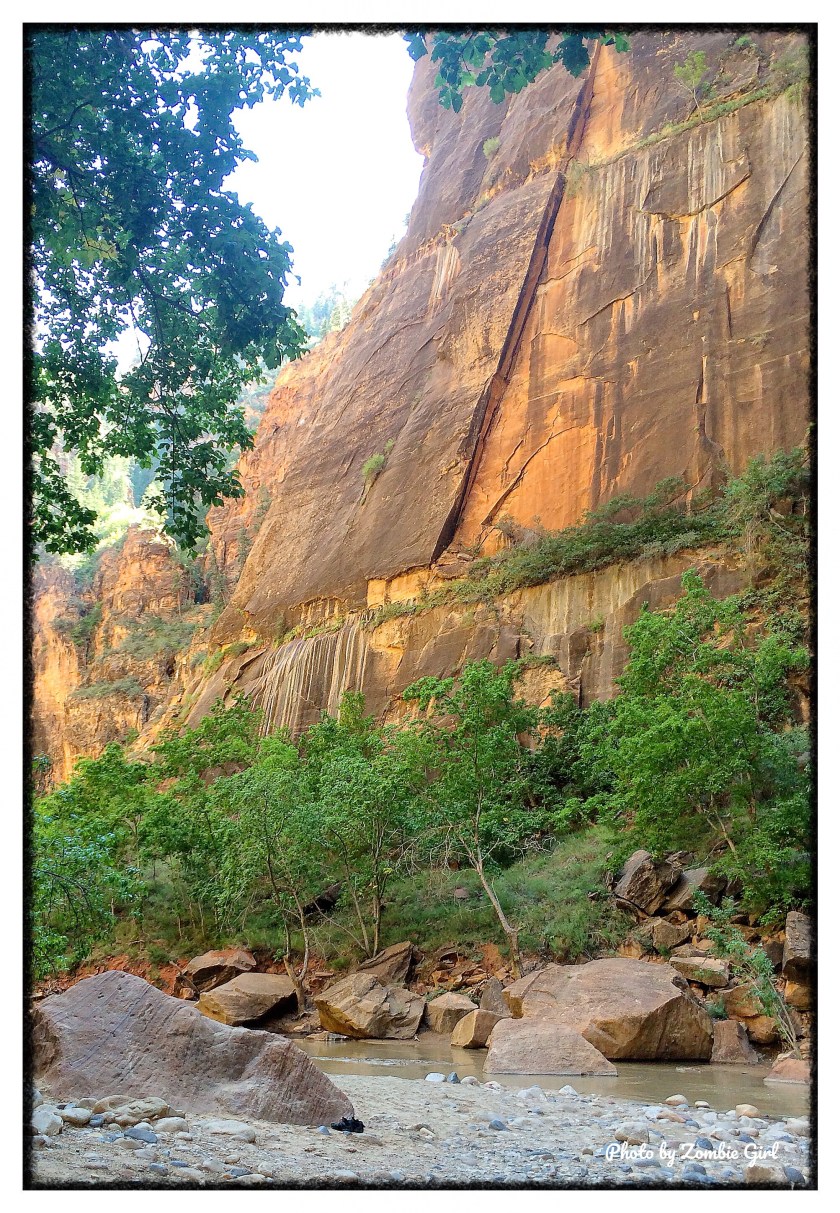
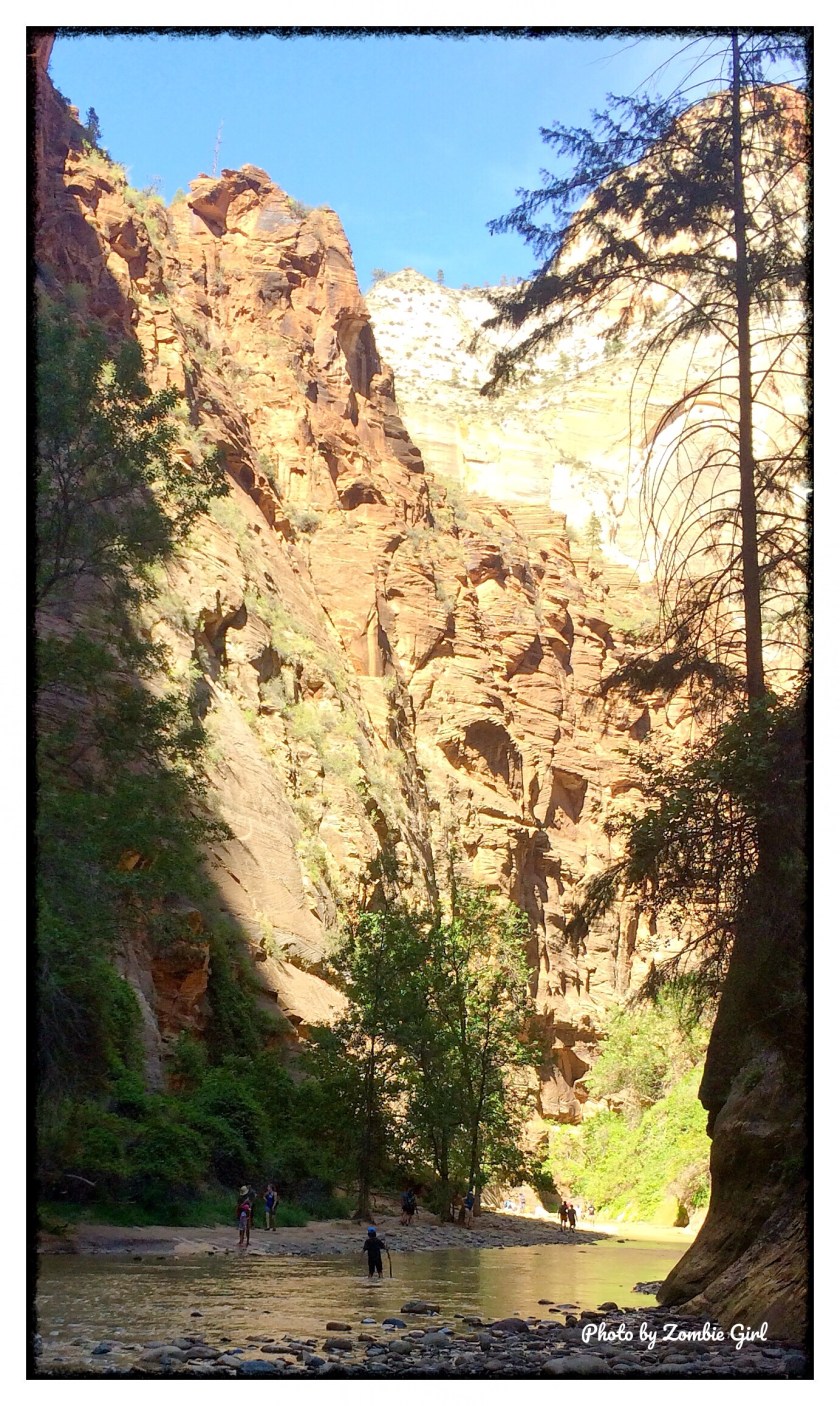
Another one of our hikes took us out to the Narrows. This is the narrowest part of Zion Canyon and offers a few different options for hikers. The start of the Narrows is accessible from a fairly smooth hiking path – the Riverside Walk. This takes you as far as the river, which more adventurous hikers might want to follow to travel further into the Narrows, although permits are needed for progressing past certain parts of the route. If you want to walk further than the paved section of the hike, you need to wade through the flow of the river – so good sturdy shoes, hiking poles and some dry socks for the way down are a must. It’s also really important to be good at navigating and reading weather conditions to make sure you are safe in the Narrows – many people have found themselves in difficulties in this area after experiencing flash floods, strong currents or getting lost.

When we arrived at this point, the water was up to our shins and fairly fast moving. Given that there was a very high risk of flash floods that day (and we’d already seen first hand how quickly a huge amount of rain could come down) and that we weren’t really prepped for hiking in water, we decided to not go much further than this, content with seeing the start of the winding caverns of the Narrows.

What a difference a month makes

How Mirror Lake in Yosemite Changes in Just Two Months

We often struggle with picking where to go on our holidays. Holiday time is so precious and if you don’t get that many days off, you have to make the most of them when you do. So we usually spend ages looking at where to go and what to see when we get there.

Often the ‘when’ of our trips can be pretty set in advance – usually when the flight prices are cheaper or working around particular seasons (e.g. avoiding rainy seasons). One thing that it’s easy to forget to consider is the differences that a couple of weeks can make to your experience of a destination.

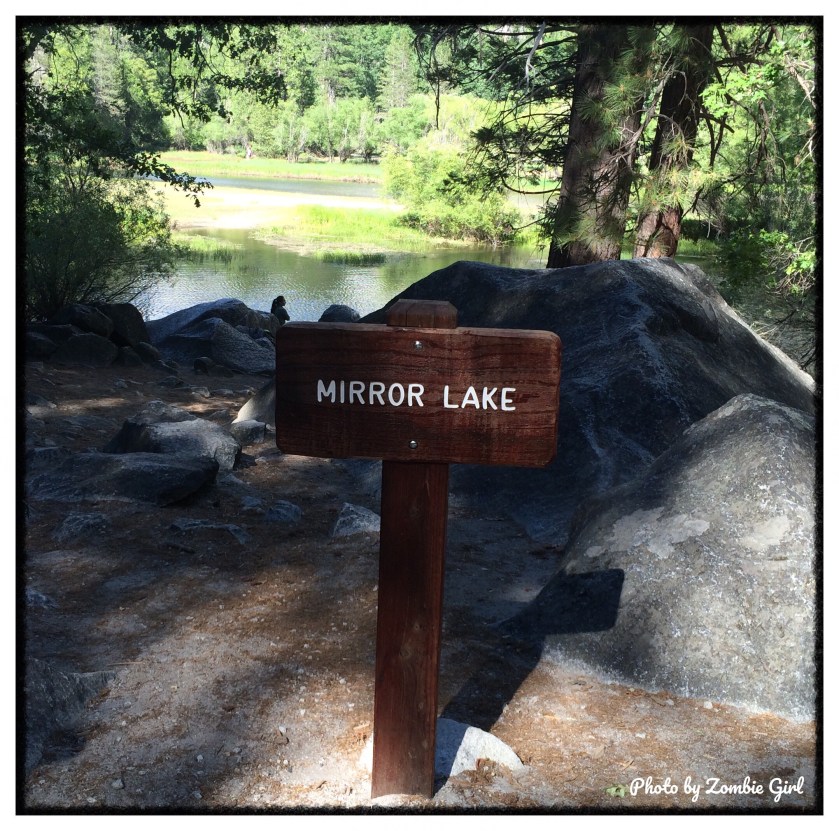
A good example of this is our trip to Mirror Lake in Yosemite. We’ve been there on a couple of occasions but the last time we visited, we went slightly earlier in the year – there wasn’t too much of a difference, we are talking a visit in early June rather than late July. The difference in scenery, however, was astounding.
ML1

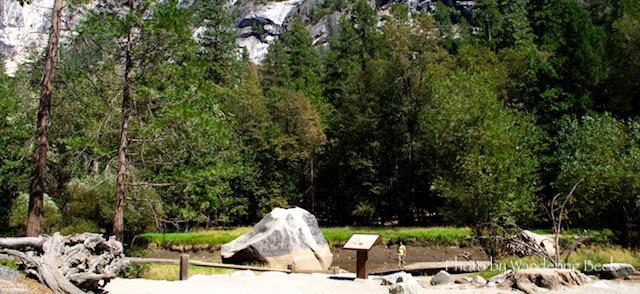
This is Wandering Beeb’s photo of Mirror Lake, or more accurately, Mirror Meadow on our first trip. Green lush grass and trees with lots of boulders and sand filled the valley.

ML 3

The visit in late July saw stunning scenery, the centre of which was a field, surrounded by Yosemite’s recognisable granite cliffs. It was a lush setting, with huge boulders dotted throughout the area and sand drifts marking the uneven ground. Mirror Lake (or Mirror Meadow as it’s sometimes known due to the lack of water) is around a 1-3 hour round-trip, starting at shuttle stop number 17. The lake is a hangover from the glacial lake which once filled most of Yosemite Valley, standing at 4000ft elevation. Standing in the middle of the meadow, the cliffs surrounded us, building cut-outs in the blue sky.

ML2

Jumping forward to our visit to the same spot in early June a couple of years later and the place was unrecognisable in comparison! The same granite cliff faces surrounded us but this time, there was no meadow to stand in. Instead we stood on the edge of a serene lake, silent and glass-like. It was hard to believe that the small number of weeks had made such a difference.

ML5

Mirror Lake in early June – the water was full and still, creating the perfect reflection. We has stood here a few years earlier in the July when it was a dry meadow.

The still lake reflecting the granite cliffs. It was dizzying to look down on the reflection without seeing any disturbance in the water.

The trail around the lake is a really nice walk, lined with little cairns. These piles of balanced rock had filled one part of the trail, creating an interesting spectacle. Cairns have been used throughout history for a range of different reasons, often marking buried resources, graves or trailheads. The ones at Mirror Lake don’t seem to serve this purpose and raise an interesting debate on how people view them. Some say they see them as a temporary art piece, an example of humans making their mark in an environmentally friendly(ish) way. Others say they are a form of graffiti, disrupting natural placement of stones and making a mark on nature that shouldn’t be there. Little stone cairns dotted around the trail at Mirror Lake in Yosemite. Historically used to make trail heads, resources or burial sites, these ones don’t seem to hold any purpose. Some say these are an eyesore, a type of graffiti, others see them as temporary art work.

Little stone cairns dotted around the trail at Mirror Lake in Yosemite. Historically used to make trail heads, resources or burial sites, these ones don’t seem to hold any purpose. Some say these are an eyesore, a type of graffiti, others see them as temporary art work.

Much less organised than the cairns were the huge rocks dotted around the lake. Standing on one of the larger boulders, the stillness of the water perfectly reflected Half Dome and we quickly set down our day packs to whip out our cameras to capture the image. The dual image of the rocks above us and their inverted view below was dizzying but beautiful, the images we captured failing to do it justice.

Wandering Beeb at Mirror Lake, silhouetted against the huge granite cliffs of Yosemite.

ML4

Have you been to Mirror Lake? When is the best time of year to visit? What’s your take on the cairns – are they temporary art or graffiti?

A Birthday in Central Park

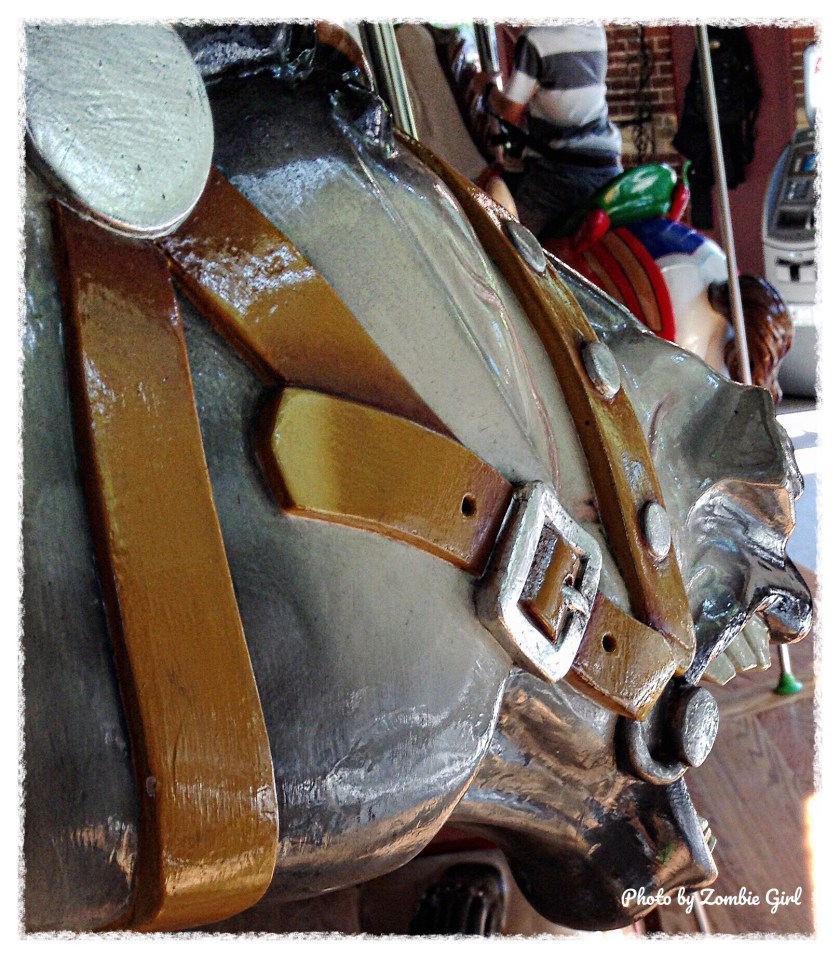
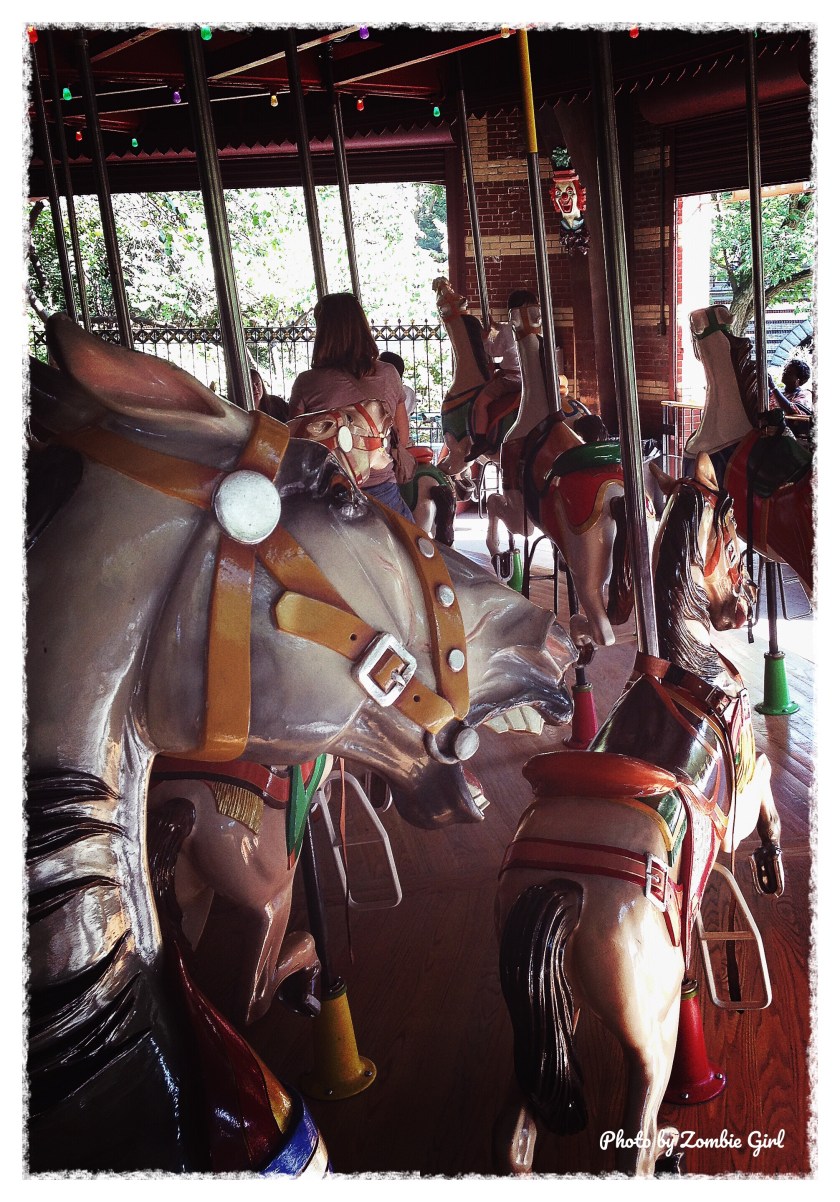
Up and down, up and down, the scenery flashed past as the carousel spun, taking us laughing riders nowhere and everywhere all at once. It was my 30th birthday and I’d been lucky enough to convince Wandering Beeb, my sister and her partner to spend it with me in New York.

I’ve been a couple of times to New York, but never ridden the carousel in Central Park – and so this was the one thing that I wanted to do for my birthday.

enlight132

The carousel has been in existence since 1871, first operated by a mule and horse who would pull the ride round from an underground platform. Fortunately, these days the ride is much more animal friendly and is powered mechanically.

I’ve always liked carousels and it felt like the best place to do something childlike and fun! Although the ride was short, it created a perfect snapshot picture, something that will always stay in my mind, the wind whipping round us, hair flying and most of all, lots of laughing.

enlight126

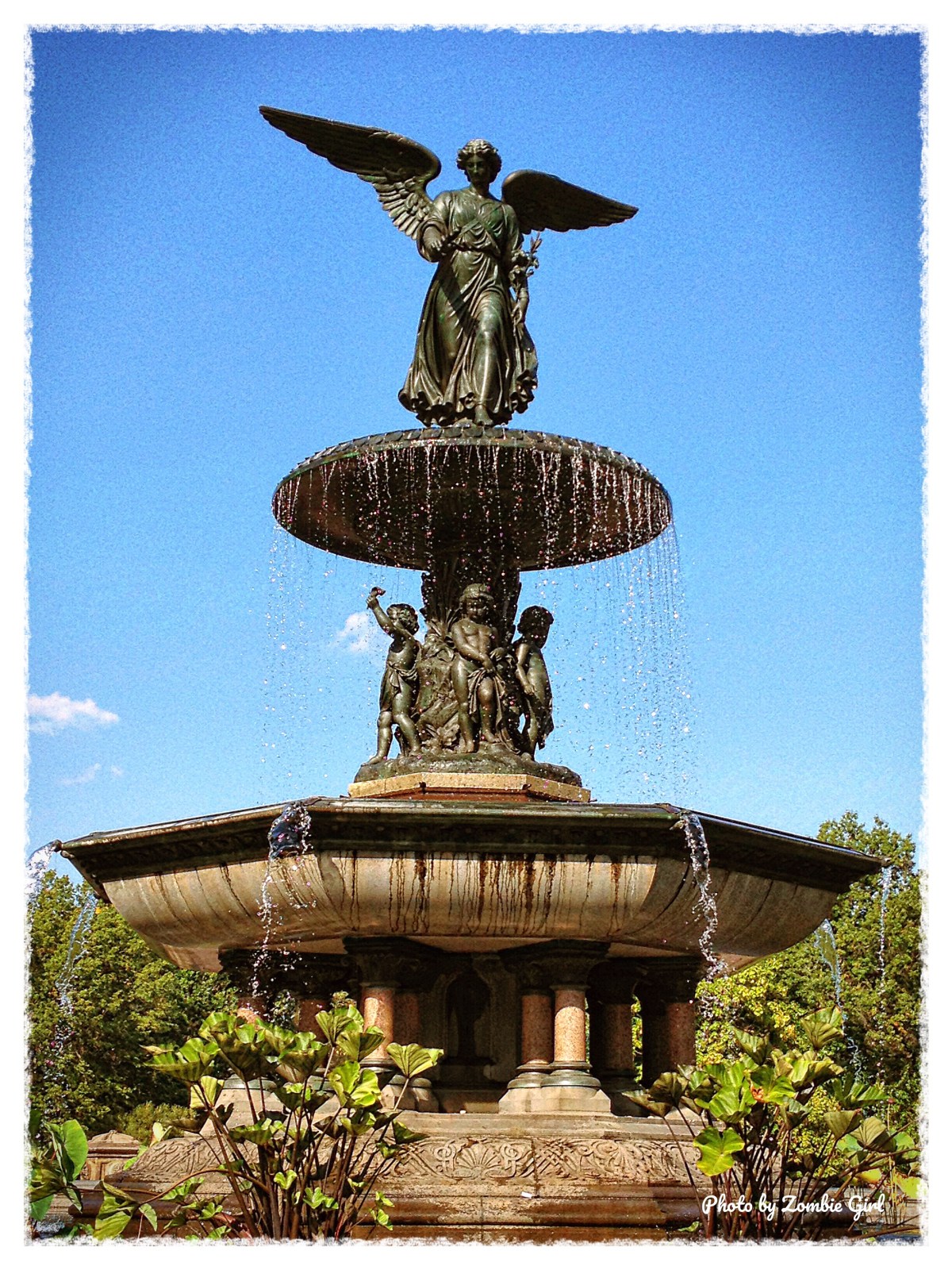
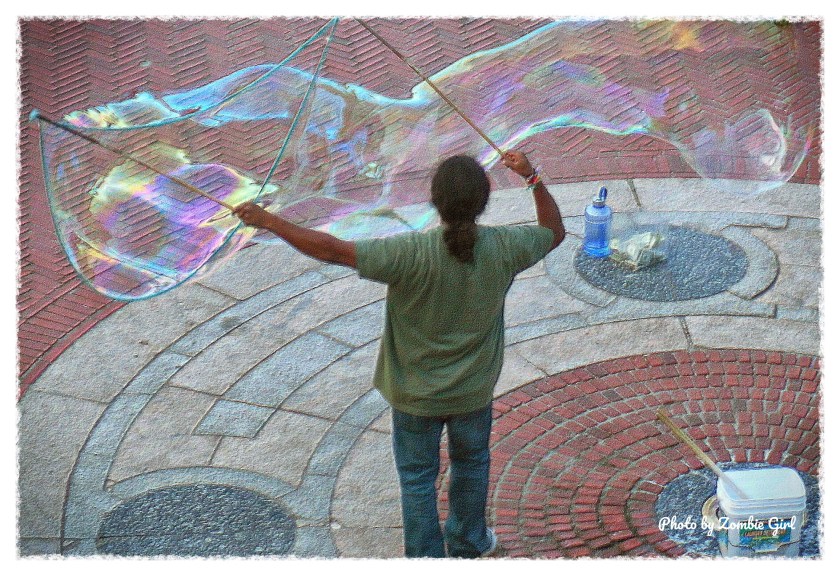
We spent the rest of the day wandering around the park, taking in the highlights. Bethesda Fountain took our attention straight away, standing out against the blue sky. The noise of running water from the fountain merged with the sounds of the performers in the court yard, entertaining the crowds with a large bubble display.

enlight129

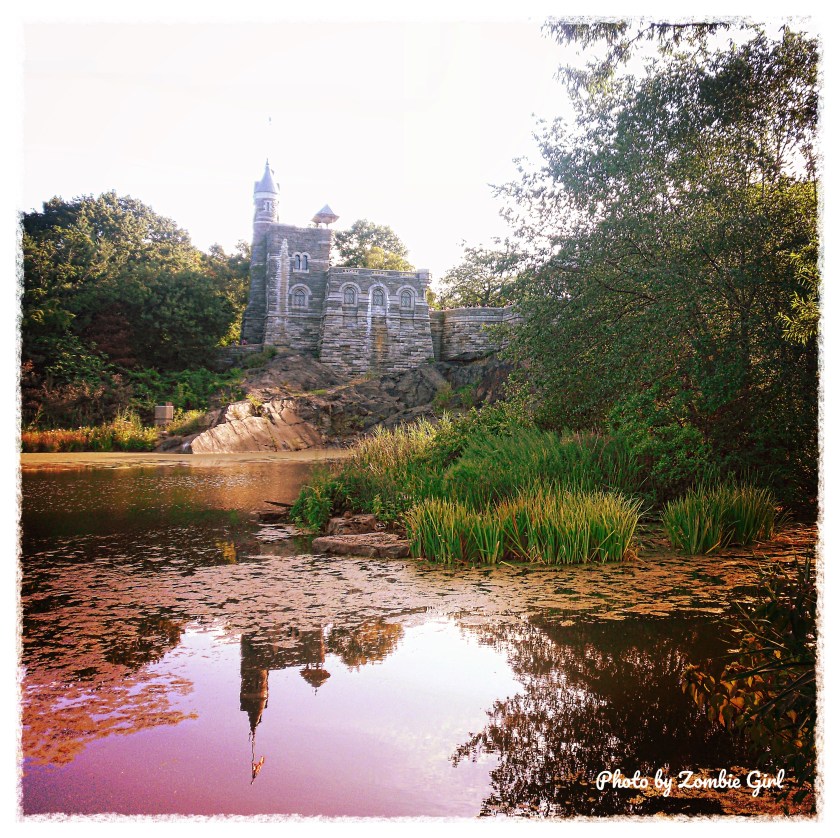
We sat perched on the side of the stairs for a while, looking down on the activity below, before heading off to walk around Belvedere Castle. The image of the castle reflected in the pond certainly lived up to the castle’s name, which means ‘beautiful view’ in Italian.

enlight131

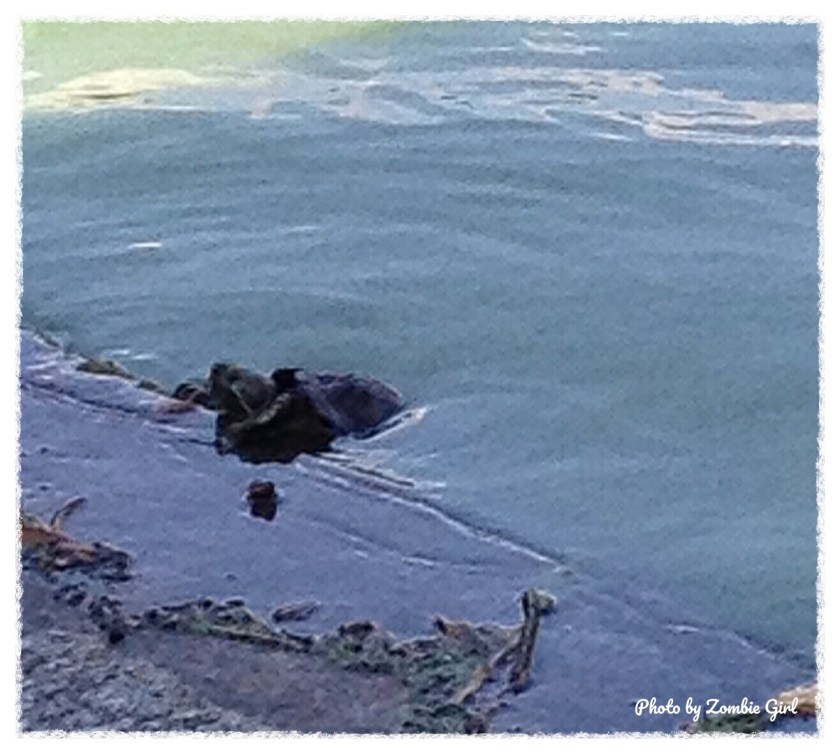
The nearby pond, known as Turtle Pond was full of cheeky little turtles, all bobbing up in the water to see the human visitors wandering around the side of the pond. Once we spotted one, it was easy to see all of the other little shapes in the water, following people around for a sneaky bite of their lunch.

enlight127

We stopped off at the Chess House – a brilliant idea of a place, filled with outdoor tables where people can set up their own games. I loved this and it felt like a hidden gem, bringing people together in a beautiful setting.

We rounded off the day sat on some of the large rocks, soaking up the sun and people watching, turning snippets of over-heard conversations into elaborate made-up back-stories. It was the best way to spend an afternoon, by being New Yorkers for the day in the hub of the big city.

What bits of Central Park did you enjoy the most? Are there any highlights we missed? Tell us your stories in the comments.