Half Dome: Subdome

You can read part one and part two of our trip up half dome here:

Part one

Part two

The Sub-dome was in sight! After a gruelling but beautiful hike past Vernal Falls, Nevada Falls and through Little Yosemite Valley, we reached a sign to say that Half Dome was a mere 2 miles away.
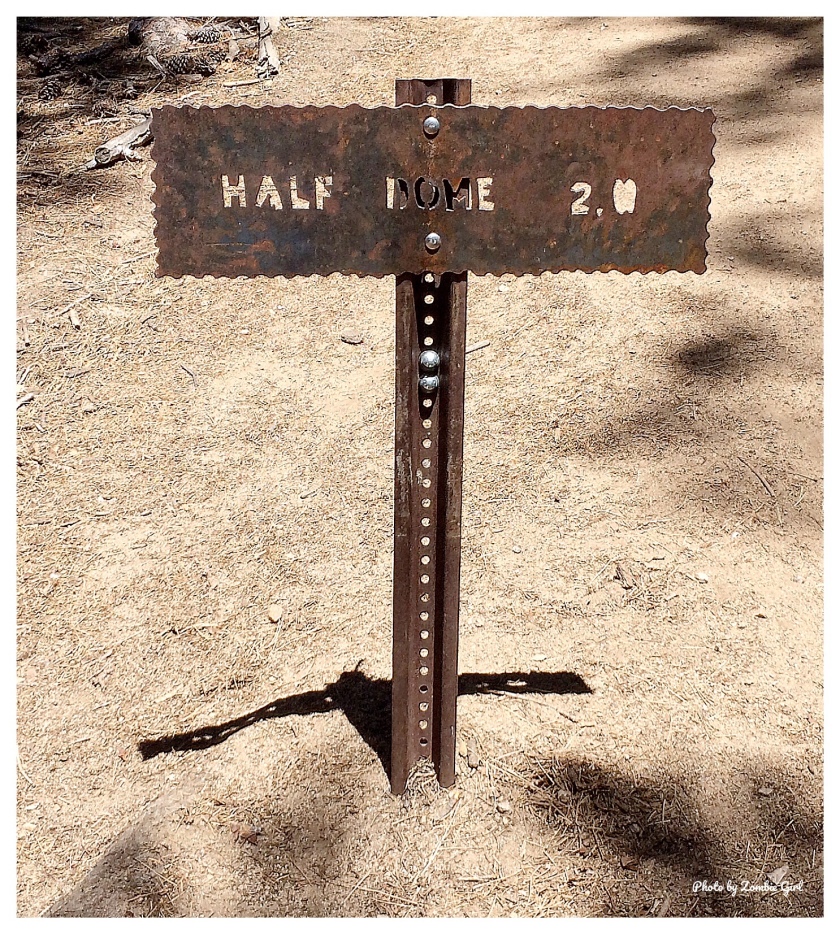
By this point, I was done in. I was struggling to breath (asthma and altitude do not go hand in hand) my voice had gone almost completely and I was shattered. I also knew that we still had a roughly 4-5 hour hike back down to the valley. I am a very stubborn person and I refused to turn back until I made the Sub-dome. By this point, I’d accepted that there was no way I was going to make it to the top of Half Dome. Physically, I was too knackered to pull myself up those cables, and I’m not sure if I’d have been entirely ok with the height, but I was determined to meet my goal of reaching the Sub-dome.
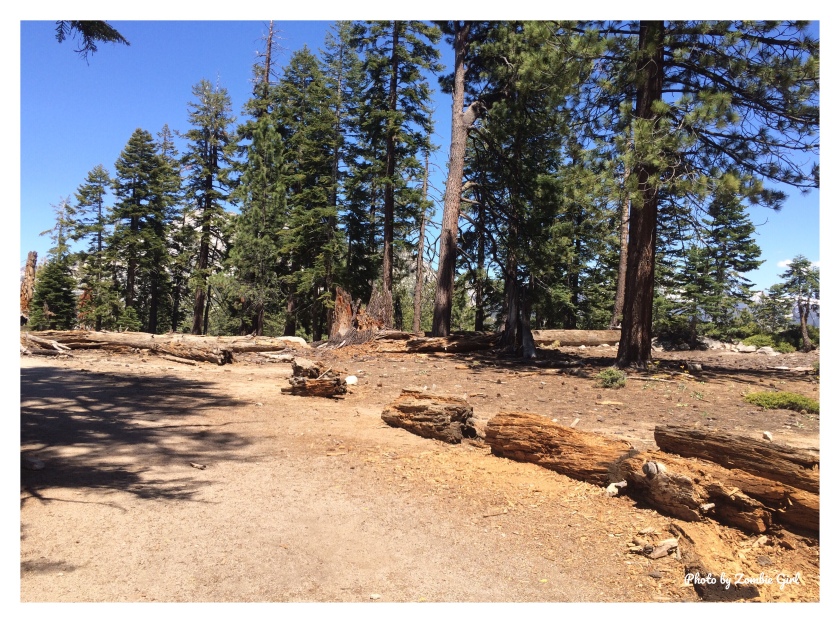
After some challengingly steep switchbacks through the forest, we passed through the section of the trail where a permit was required and broke above the tree line.
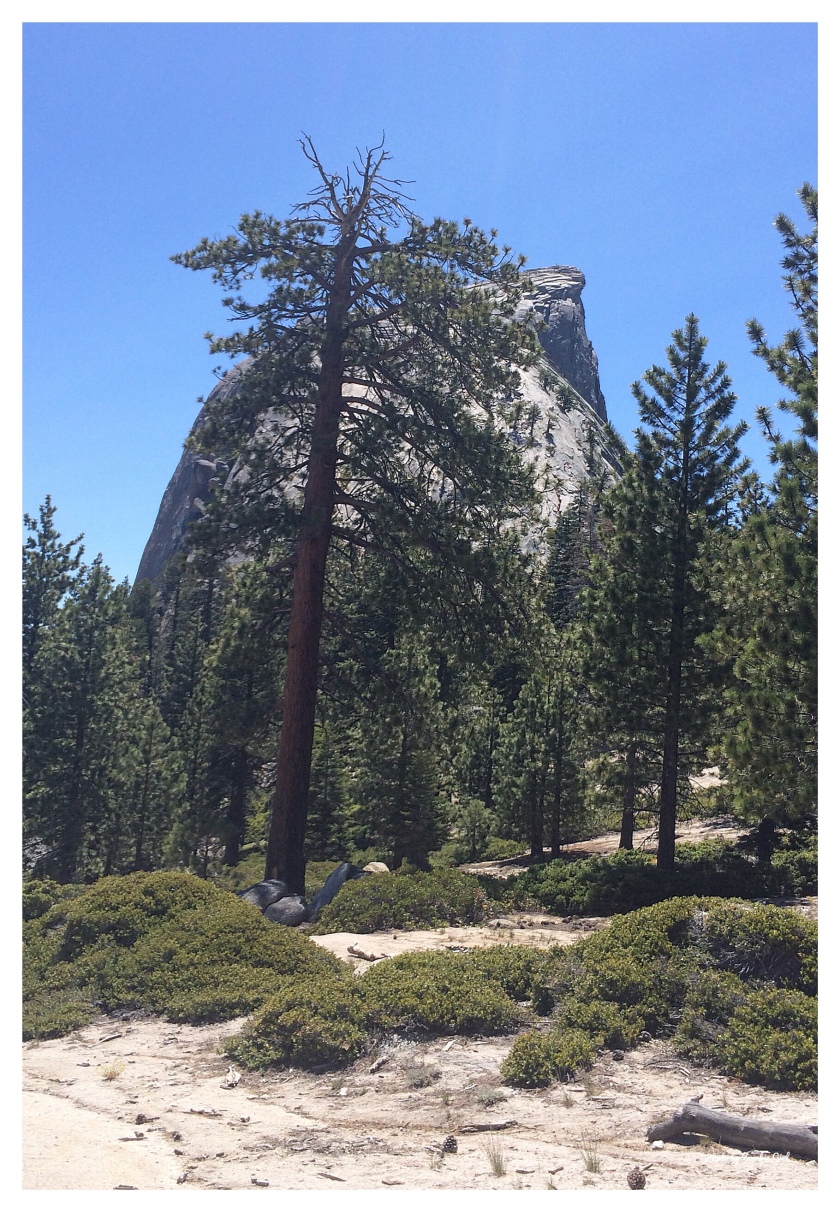
Being that high up, and that close to the Sub-dome was incredible. Despite feeling broken, it was probably one of the biggest highs of my life!
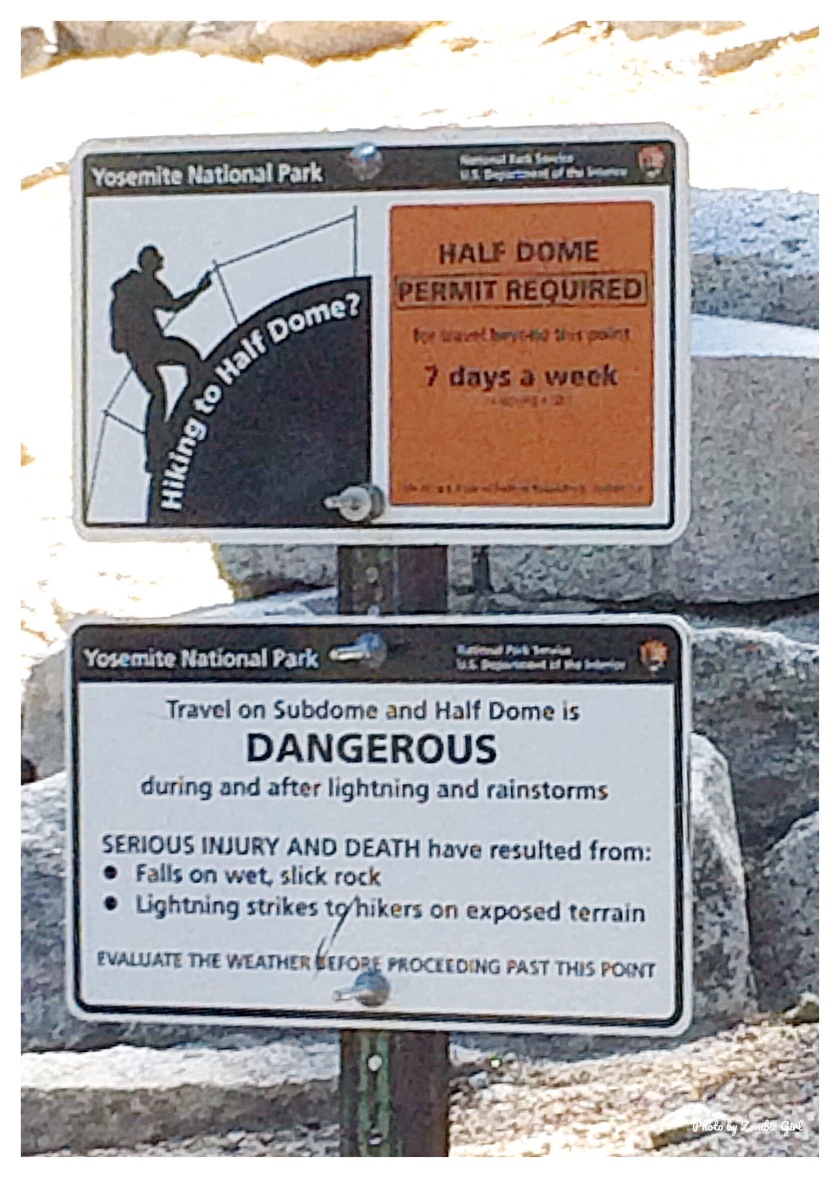
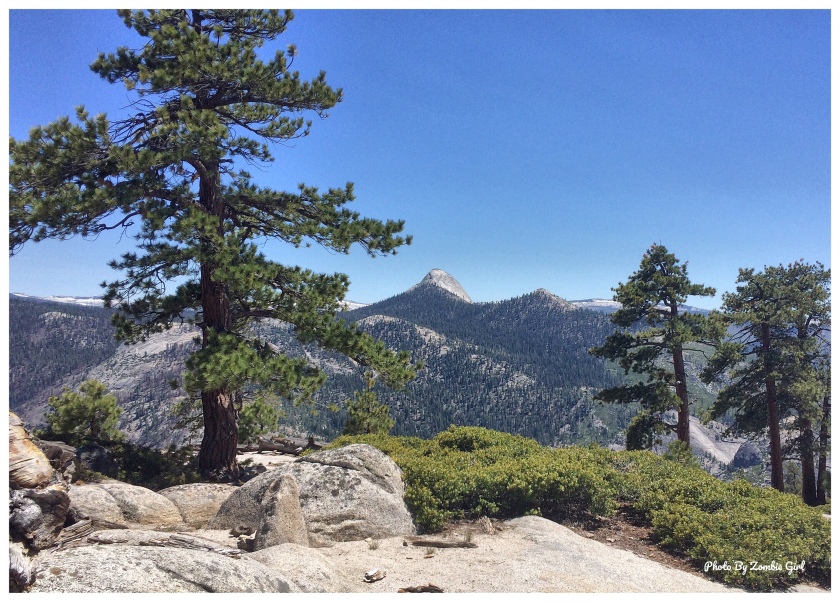
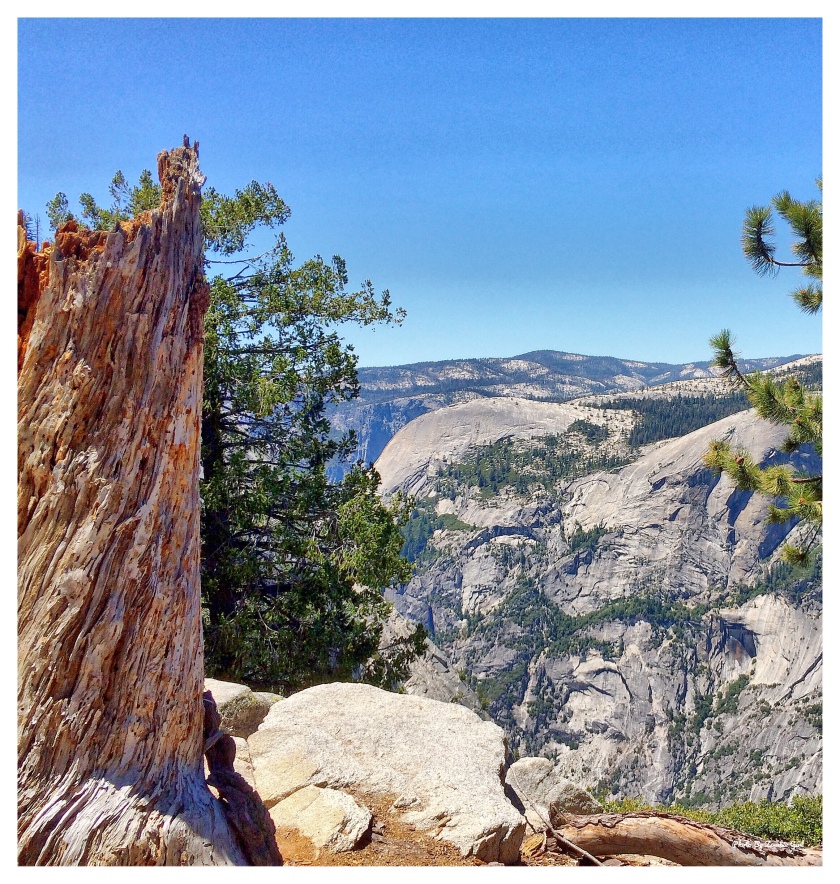
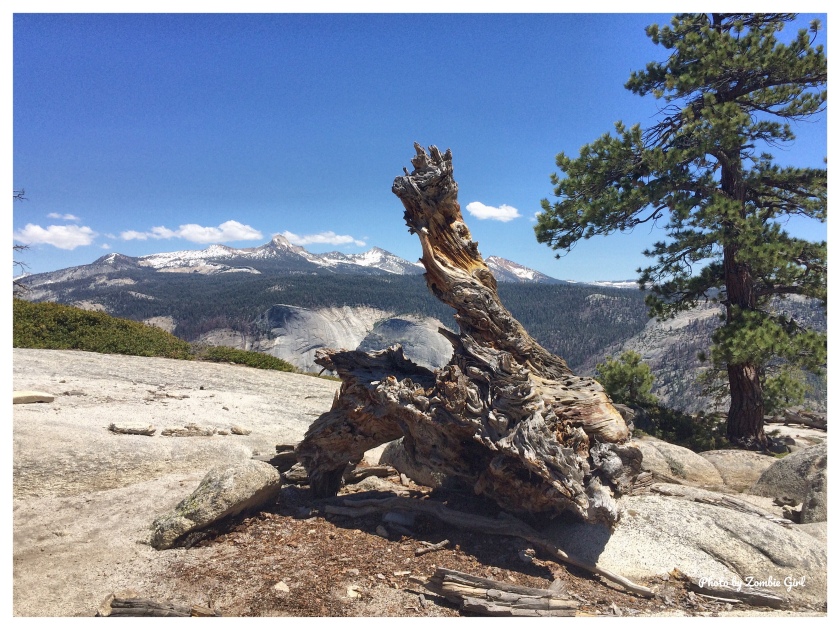
The views were incredible. Snow-topped mountains in the distance, blue skies and harsh granite surrounded us from all angles. It felt like we were in the sky and Wandering Beeb was in his element, snapping pictures of anything and everything! We had achieved our goal and it felt amazing to have been successful at something so physical.
After spending some time taking in the views (and catching our breath), we decide to retrace our steps and head back down the trail. By the time we hit the bottom of the waterfalls, it was almost dark. Torches on, we continued to navigate our way down. There were few people left on the trail and as it got darker, we realised that we must have take a wrong turn somewhere. We could see the lights from the toilet block across the river but there was no way we could see of reaching them. The path had gotten narrower and we were both starting to feel panicky. Afterwards, we admitted to really understanding the dangers of the park at this point, given that we were in bear territory and unsure of where we were.
Trying to remain calm, we hiked back up the path, eventually realising that we had taken a hidden fork in the trail and had headed down a bridal path instead of the main trail. It was such a relief to find the right path and head down past the toilets and water fountains, knowing that we would soon by back in the Valley, surrounded by people rather than bears and mountain lions.
We eventually arrived back in the valley at about 10pm. We were hungry, knackered and sore, and still had a 45 minute drive back to Wawona to our tent. It didn’t matter. We’d reached the Sub-dome, we’d pushed ourselves to the limit and we’d almost touched the sky.

Wash your spirit clean

– John Muir

Half Dome: Nevada Falls and Little Yosemite Valley

You can read part one of our trip up half dome here.

The two trails up Half Dome split at the top of Vernal Falls. The Mist trail takes a short detour to the top of Nevada Falls (adding a little distance on to the journey), whereas the John Muir trail is a more direct route. We never want to miss anything (especially as it takes so much effort to climb Half Dome!) so each time we have taken the Mist Trail.

It’s about a 2 mile hike from Vernal Falls to Nevada Falls, characterised by switchbacks and some rocky pathways through a forest area. The sunlight weaving through the trees and the light reflecting off the water at the bottom of Vernal Falls created beautiful little rainbows in the mist.

The top of Nevada Falls is a beautiful place to sit and chill, having gained an extra 1000ft above Vernal Falls, taking us to a total height of 6000ft above sea level. On our first trip, this was as far as we got. We’d set off far too late in the day and didn’t really want to hike in the dark, so we chose to stop at Nevada Falls, spend some time exploring and then headed back down the trail.

One of my best memories of that particular trip was taking off our shoes and socks and paddling in the calm water of the Merced River before the waterfall. It was a perfect way to refresh ourselves after the steep climb!

Our subsequent trips have seen us hiking much further up the trail. Leaving Nevada Falls behind, Little Yosemite Valley is a much flatter part of the hike. Surrounded by trees, it offers some welcome shade from the blistering heat. I loved the surroundings here; the sounds of the forest and the smell of the trees. The scent was almost overwhelming and it makes me think of adventure every time I smell it. This was a stunning walk with glimpses of Half Dome through the trees.

Little Yosemite Campground was a big milestone for me – I hadn’t expected to make it that far!! If I was to do the trail again, I would definitely consider camping at this campground to acclimatise to the altitude and rest up before attempting the climb to the top of Half Dome.

The Mountains are calling and I must go

– John Muir

Half Dome: Vernal Falls

Half dome is not for those who are only half prepared. We prepped *a lot* and we only made it to the subdome. Only is a funny word though. For me, only reaching the subdome isn’t a failed attempt. What some would call failed, I call successful (and arguably one of my biggest achievements).

Half Dome is probably one of the most iconic sights of Yosemite National Park. It’s hulking outline stands tall over the whole park and it’s easy to see why it’s the one sight that everyone wants a photo with.

Our journey on Half Dome actually started a couple of visits back when we first stayed at Yosemite. Three friends with ambitions of making it to the top. We were fuelled with the optimism of those who have never attempted it before and bolstered by the sense of adventure that can only arise from watching ‘In to the Wild’ in a tent in the middle of Wawona the night before. We thought we could conquer it with gusto. That’s not to say we came to it green – we’d done our research; training as much as we could by getting hiking trips in back home (although to be fair, nothing like the height of Half Dome) and we’d kitted ourselves out in all of the right gear.

On that first occasion, we started out on the wrong foot by setting off far too late for the trek. By the time we had driven from Wawona to the trail head in Yosemite Valley, it was probably about 9am. Although this sounds fairly early, most people recommend that to get to the top and back in good time, you should be planning to set off on the first part of the trail at around 4/5am. As the first part of the pathway is paved, this makes sense. Trust us, you want to make up time on the way up as coming down the route in the dark because you have set off too late is no fun at all.

Getting ready for the hike is no mean feet either. The whole trail takes around 10-12 hours walk, gaining an elevation of 4800ft (8,800ft above sea level). Being prepared is so important. For me, this meant 2 hydration packs, 2 additional bottles of water, breakfast and lunch and lots of energy boosting snacks. That’s a lot to carry on your back for a hike or this length but, it is absolutely necessary!

The first section of trail is only about a mile or so of paved pathway, but it’s very steep (at this point of the trail, we were 4500ft above sea level). After a short hike up this path, the water fountains at the top are a very welcome sight. This is the last place to get water on the half dome trail (and also the last place for flushing toilets – prepare yourself!!). I have to say, this water is the best I have ever tasted. Ever. I actually ended up emptying one hydration pack and filling it up with water from this fountain instead. It’s that good, and I’ve tasted water from a glacier). I have no idea why it tasted so amazing but every time we have decided to do the half dome trail (about 3 times), the thought of that water fountain has been my motivating factor for getting to the top of the first mile!

After passing the footbridge just past the water-stop, the steepness increases massively as huge stone steps lead up to the first major waterfall on the trail; Vernal Falls. This part of the hike, although strenuous, is stunning. The steps are cut into the side of the waterfall, meaning that the water roars down to your left as you ascend. We’ve done this trail in the middle of summer and early spring. In summer, the steps are hot and dry, but in the spring it’s clear to see how the Mist Trail gets its name. In a huge contrast to the first time we took this trail, visiting in spring left us soaked! The force of Vernal Falls generated a spray which make us feel like we were hiking up the middle of the waterfall rather than the side. It was slippy and soggy work, but by the time we got to the top of the waterfall, we were grateful for the cooling effect of the spray.

The top of Vernal Falls was incredible. At 5000ft up, rushing of the water and the view across the valley below made the hard climb all the more worthwhile.

What a difference a month makes

How Mirror Lake in Yosemite Changes in Just Two Months

We often struggle with picking where to go on our holidays. Holiday time is so precious and if you don’t get that many days off, you have to make the most of them when you do. So we usually spend ages looking at where to go and what to see when we get there.

Often the ‘when’ of our trips can be pretty set in advance – usually when the flight prices are cheaper or working around particular seasons (e.g. avoiding rainy seasons). One thing that it’s easy to forget to consider is the differences that a couple of weeks can make to your experience of a destination.

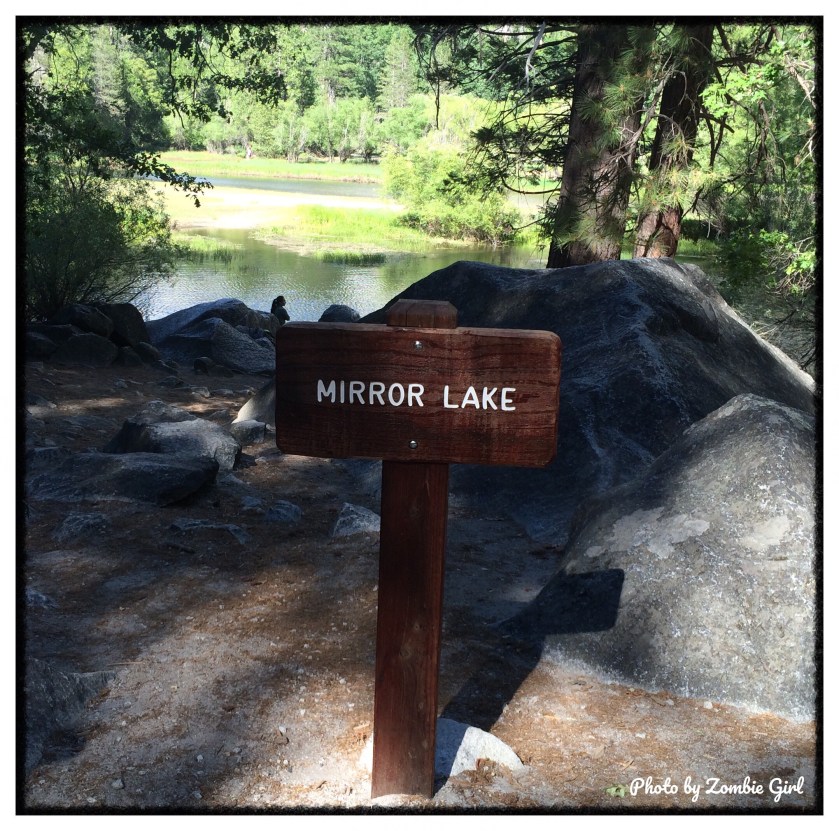
A good example of this is our trip to Mirror Lake in Yosemite. We’ve been there on a couple of occasions but the last time we visited, we went slightly earlier in the year – there wasn’t too much of a difference, we are talking a visit in early June rather than late July. The difference in scenery, however, was astounding.
ML1

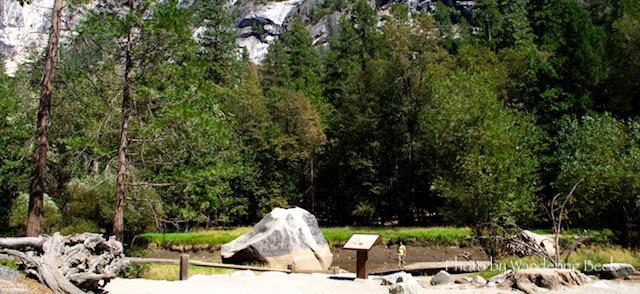
This is Wandering Beeb’s photo of Mirror Lake, or more accurately, Mirror Meadow on our first trip. Green lush grass and trees with lots of boulders and sand filled the valley.

ML 3

The visit in late July saw stunning scenery, the centre of which was a field, surrounded by Yosemite’s recognisable granite cliffs. It was a lush setting, with huge boulders dotted throughout the area and sand drifts marking the uneven ground. Mirror Lake (or Mirror Meadow as it’s sometimes known due to the lack of water) is around a 1-3 hour round-trip, starting at shuttle stop number 17. The lake is a hangover from the glacial lake which once filled most of Yosemite Valley, standing at 4000ft elevation. Standing in the middle of the meadow, the cliffs surrounded us, building cut-outs in the blue sky.

ML2

Jumping forward to our visit to the same spot in early June a couple of years later and the place was unrecognisable in comparison! The same granite cliff faces surrounded us but this time, there was no meadow to stand in. Instead we stood on the edge of a serene lake, silent and glass-like. It was hard to believe that the small number of weeks had made such a difference.

ML5

Mirror Lake in early June – the water was full and still, creating the perfect reflection. We has stood here a few years earlier in the July when it was a dry meadow.

The still lake reflecting the granite cliffs. It was dizzying to look down on the reflection without seeing any disturbance in the water.

The trail around the lake is a really nice walk, lined with little cairns. These piles of balanced rock had filled one part of the trail, creating an interesting spectacle. Cairns have been used throughout history for a range of different reasons, often marking buried resources, graves or trailheads. The ones at Mirror Lake don’t seem to serve this purpose and raise an interesting debate on how people view them. Some say they see them as a temporary art piece, an example of humans making their mark in an environmentally friendly(ish) way. Others say they are a form of graffiti, disrupting natural placement of stones and making a mark on nature that shouldn’t be there. Little stone cairns dotted around the trail at Mirror Lake in Yosemite. Historically used to make trail heads, resources or burial sites, these ones don’t seem to hold any purpose. Some say these are an eyesore, a type of graffiti, others see them as temporary art work.

Little stone cairns dotted around the trail at Mirror Lake in Yosemite. Historically used to make trail heads, resources or burial sites, these ones don’t seem to hold any purpose. Some say these are an eyesore, a type of graffiti, others see them as temporary art work.

Much less organised than the cairns were the huge rocks dotted around the lake. Standing on one of the larger boulders, the stillness of the water perfectly reflected Half Dome and we quickly set down our day packs to whip out our cameras to capture the image. The dual image of the rocks above us and their inverted view below was dizzying but beautiful, the images we captured failing to do it justice.

Wandering Beeb at Mirror Lake, silhouetted against the huge granite cliffs of Yosemite.

ML4

Have you been to Mirror Lake? When is the best time of year to visit? What’s your take on the cairns – are they temporary art or graffiti?