These Boots Were Made For Walking: A Hiking Boot Review

When you are travelling to lots of different places, or even just getting out and about on local hikes, one of the most important things to consider is what you put on your feet.

Your feet are (hopefully) going to carry you many miles and getting the right shoes is one of the most important things that you can do.

My first pair of proper walking shoes for travelling (excluding the big clunky ones that I had in school for an activity weekend trip) was a pair of Timberland Ledge Sport shoes. They cost around £50 and were a good sturdy shoe.

Lightweight and great for hiking in hot weather, they did the trick as a good, entry level pair of hiking shoes. As they were so light, they were great for not adding additional weight to any baggage allowance. With Vibram soles, they had good grip on slippy or rock surfaces, giving a little bit of extra traction when needed. Although they were incredibly comfy (walking on a cloud is the phrase that springs to mind), they are probably best for sticking to walks along well-defined trails as their soles aren’t as hard wearing or chunky enough to cope with anything too rocky.
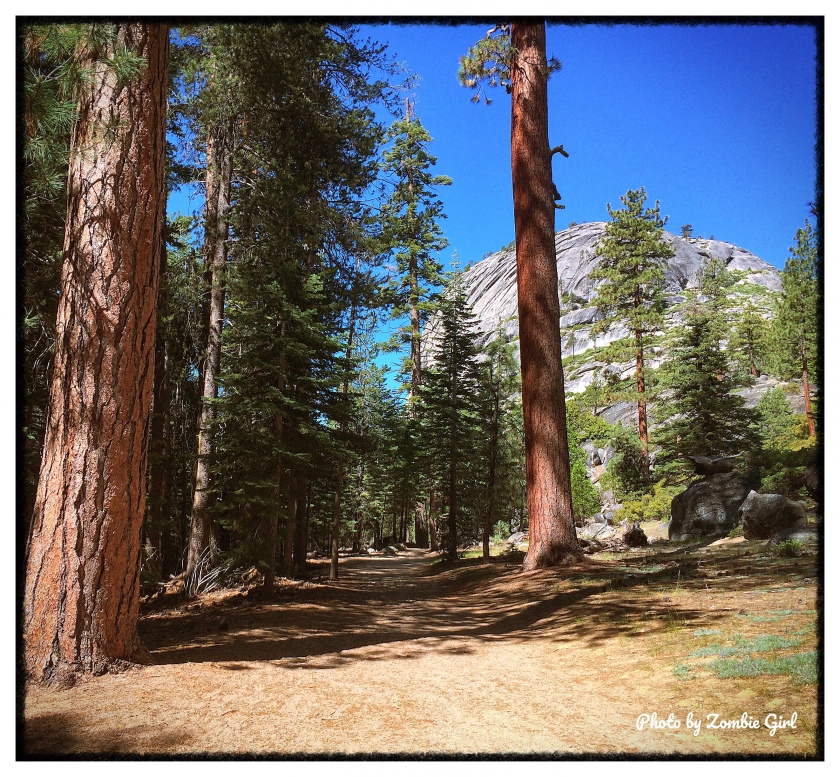
You don’t need a complicated hiking shoe for long and sandy trails, just something comfy to help with the mileage.

I found that after a year or so, the soles had worn down quickly and the grip on the bottom was almost completely gone. They were also fairly low cut shoes, which didn’t deliver on the ankle support. If you are planning to walk around in places with lots of uneven ground, these are not the shoes for you. That being said, I still have my original pair and will drag them out on occasion for walks around local parks. You could say that this pair are in semi-retirement.

My current ‘everyday’ hiking boots are a pair of Anatom V2‘s. This was a brand that I hadn’t really heard of until I started to do my research. Located in Scotland, they test their boots on the local hills and fells, making them a sturdy choice for anyone aiming to do their walking on rough, uneven ground. The high supports on these boots have saved me from going over on my ankle too many times to count – something that was invaluable on the rocky paths through Zion National Park. You can read about our adventures in Zion here.
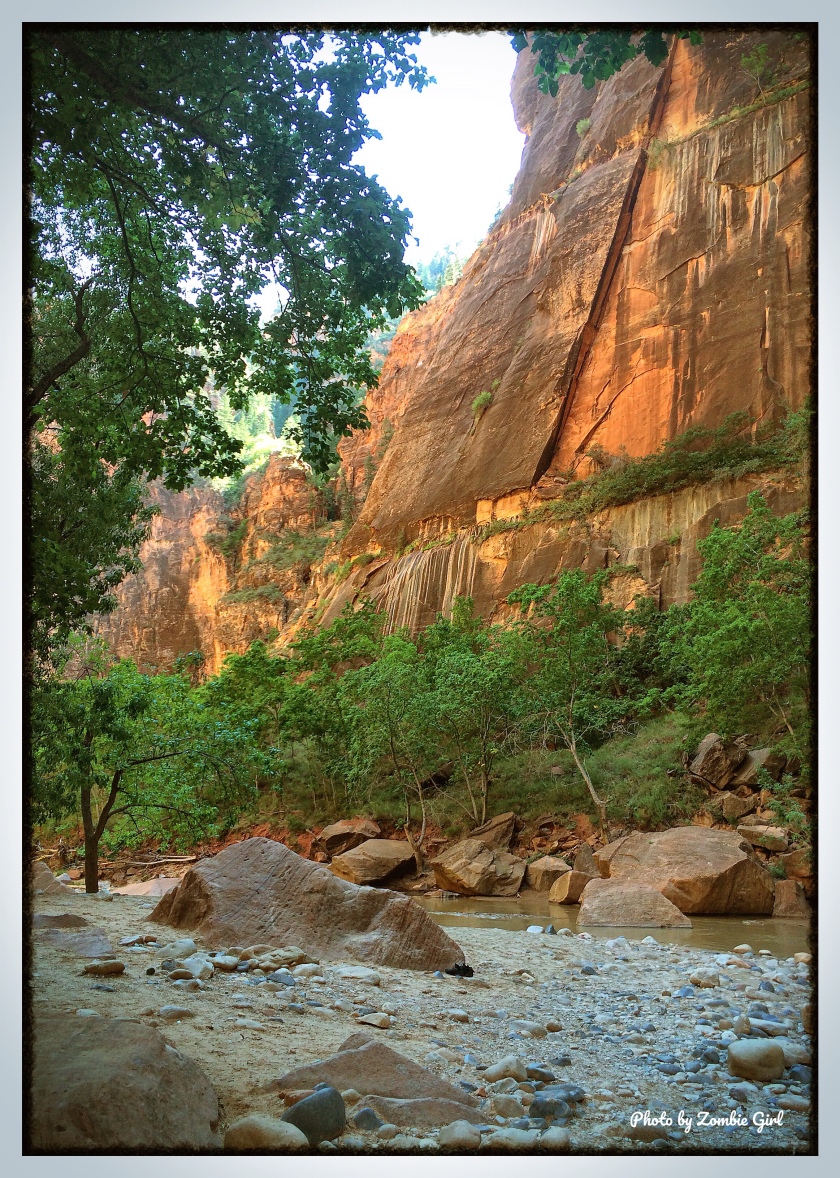
The rocky terrain of Zion meant that some sturdy ankle support was essential!

Again, these boots have Vibram soles which were a little thicker than my last pair. This meant that the grip has stayed fairly deep and they were perfect for hiking up the steep granite in Half Dome, Yosemite – even when it was covered in water and slippy as hell!
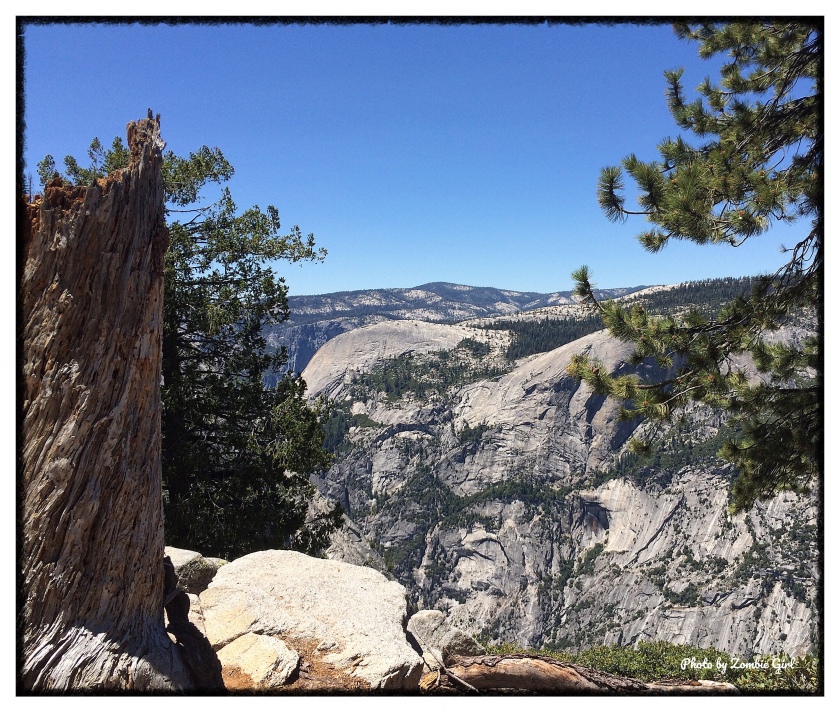
The waterfalls along the paths in Yosemite made the granite slippy, so Vibram soles Boots were a must.

It’s useful to note that these boots did take some time to wear in. They were fairly stiff across the toes (great for protecting the feet but not so great for bending toes!) and they took some time to really feel comfortable. They are fairly lightweight boots and this means that they are travel friendly.

Wandering Beeb favours the SCARPA R-Evo GTX boots. When I asked him what he liked in particular about them, I was told, “they are good for walking in”, which I took to mean that they were comfortable! (He’s a man of few words!). He did say that his toes sometimes go numb when he walks for some distance, but then again, he has a back problem and he is known to have a numb toe when sat on the couch so I don’t think that we can blame the boots for that!

Sometimes, an everyday pair of hiking boots aren’t always suitable for when the weather changes and the temperature drops. Hiking in snow or ice can be a challenge which requires a specific bit of kit. This brings me on to my favourite pair of hiking boots: my North Face Chillkat II Snow Boots. Let’s get one thing clear- these boots are heavy!! They are very chunky and your suitcase will not thank you for packing these on your next trip – it would be far better to wear them on the plane than let them add to your precious luggage allowance. The weight of these boots is probably their only down-side. These boots are incredible! Firstly they are lined with an internal sock which is fairly thick and serves two main purposes: the first being to cushion feet on long walks. I mentioned walking on a cloud earlier – this is like walking on a cloud, on a trampoline, with pillows on your feet. They are that comfy.

The second purpose to the inner lining is to provide a thermal layer to keep heat in, which works perfectly, making feet feel toasty on the coldest of hikes. They are actually designed to withstand temperatures of -32c and although I’ve never faced such extreme temperatures, I can believe that these boots would stand up to the challenge, given how warm they are.
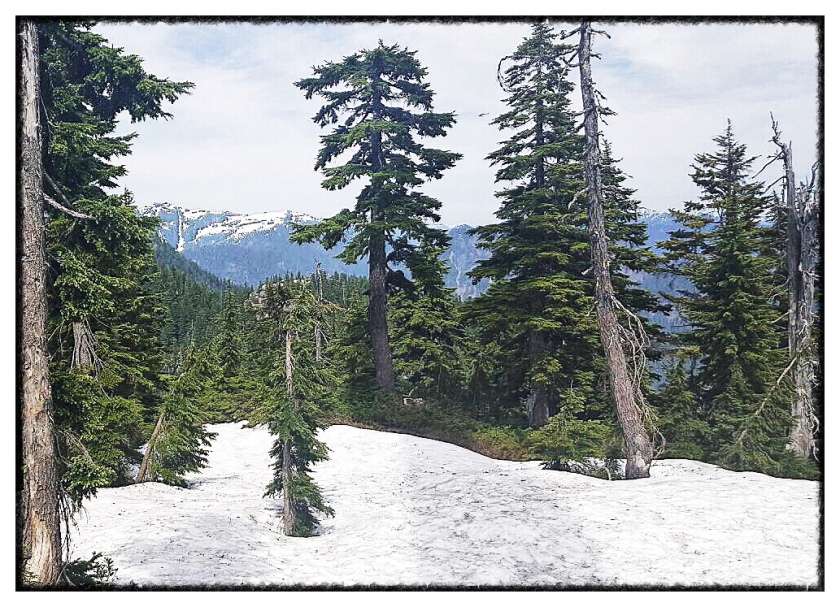
Warm hiking boots were needed for snowy hikes - keeping your feet warm in cold temperatures is a must.

Vibram soles create a hardy, non-slip grip on the bottom of the boots giving great traction on icy ground. I actually dig these boots out each winter to wear on my walk into work – they make easy going of the ice / snow and keep me warm on my commute. The high-cut, thick padding on the top of the boot helps to keep warmth in and creates a cushioned edge, preventing any rubbing on long walks. The bottom of these boots is almost like a Wellington boot – great for wet weather walking. These boots have made sure that I’ve stayed warm, dry and safe on many snowy hikes (read about our hike in the snow-filled Lake District here) and after 4 years, they are still going strong.
Choosing a new hiking boot shouldn’t be difficult but there are some things you should consider. Our top tips might be handy to keep in mind:

  • Think about what you will be using the hiking boot for – cold weather walking? Snow and ice? Summer hikes? Trails or rocky surfaces? Know where you will be mostly hiking and then buy your boot to suit the terrain.
  • Think about comfort not style – I’m a bit of a magpie and often aim for the pretty item, however I’ve learned that the pretty boots in the shop might not be very comfortable after five hours of walking. Trust me, comfort must come first!
  • Look out for Vibram soles – nothing else really compares and you’ll be thankful for it when it stops you slipping on rocky paths
  • Where will you be using your boots? If you are planning to travel by air, lightweight boots might be more luggage friendly.
  • Try your boots on in a shop first before ordering. Good hiking shops often have little ramps and different terrain on which to try out your boots. This gives you a good sense of how the boot performs on different types of ground. Even if you are going to buy over the internet, try and visit a shop to try them on first.

Happy walking! Xx

Sculpture Trails and Tall Trees: Renewal

One of the things I love most about travelling is the opportunity to get outdoors and experience nature. Sometimes a walk amongst the trees or by water is all that’s needed to reset, recharge and re-energise the mind.

On the way back from a weekend away for a friend’s wedding, we found ourselves passing Beacon Fell Country Park in Preston, UK and decided to spend some time exploring.

With 271 acres of woodland, moorland and farmland, there is plenty to explore. We chose to follow the sculpture trail which leads out of the car park, through the woods and up to the summit of the fell.

Views from the top of Beacon Fell

There were beautiful views from the top of the Fell – but be warned, it’s so windy up there! I was like a panda by the time we came down – I had more mascara on my cheeks than my eyelashes!

At the top of the Fell is a stone structure, marking where the Beacon would have stood. There is evidence that the Beacon was used as far back as 1002 AD. Historically lit to warn of danger (e.g. attacks), Beacons are also used to celebrate national occasions such as coronations of a new monarch.

Stone marking the site of the Beacon

Throughout the trail, there are numerous sculptures dotted through the forest by artist Thompson Dagnall. Alongside carvings of bats and birds hanging from the trees, a huge winding snake makes its way down the hill side. People were walking on the snake to make their way down the hill and it was a good test of balance to make it all the way to the bottom without falling off. Watching people tightrope walk down the snake was great entertainment: wobbly arms and legs all round!

Wooden snake sculpture at Beacon Fell

Alongside the wooden sculptures, there were also woven animals dotted throughout the forest. Unlike the bigger sculptures, they were harder to spot and this turned our walk into a bit of a treasure hunt!

Living art work of a deer in the forest

We found that the light changed drastically whilst we were there, creating a very different atmosphere throughout the day. From dark and mysterious to bright and magical, the tall trees filter the light, creating interesting shadows and patterns on the forest floor.

Interesting changes to how the light filtered through the Forest created some great photo opportunities

A fun place to visit, Beacon Fell is a excellent day out, especially if you like a little entertainment in your nature walks. It reminded me of the National Parks in America, which is great if funds are low and more local travel is needed.

Following our walk, it felt like all of the cobwebs (and the impending hangover from the wedding party) were blown away. I always feel renewed after time in the outdoors and it reminds me that being connected to nature is a good way of revitalising myself and recharging my batteries.

The view from the top of Beacon Fell

Although this trip was some time ago, just going through the photos has me longing for forests, hills and new places. Although the rain and cold weather is still here (in April no less!), it feels like time to dig the tent out and think about places to camp when the weather gets warmer.

Calgary Street Art

At the end of our trip in Canada last year, we found ourselves with a couple of hours to kill in Calgary before flying home.

We didn’t really have time to make a specific trip out to a tourist spot or take a mini city tour (something that can be a really good way of seeing places when you are short on time).

Instead we took some time to wander round the streets and soak up the atmosphere. Luckily it was nice and sunny, meaning we could meander round the streets fairly comfortably.

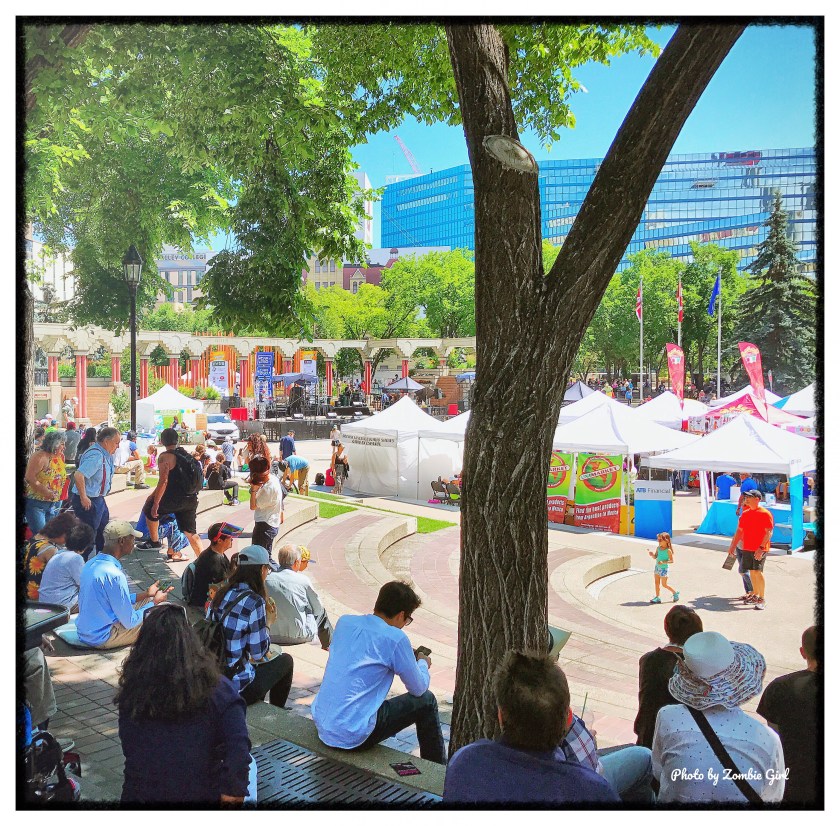
On our unstructured trek round the city, we found loads of interesting street art, as well as a festival celebrating different cultures.

Street festival in Calgary

A mix of culture, music and food was on offer and a band in the centre of the plaza had people up dancing, enjoying the sunshine.

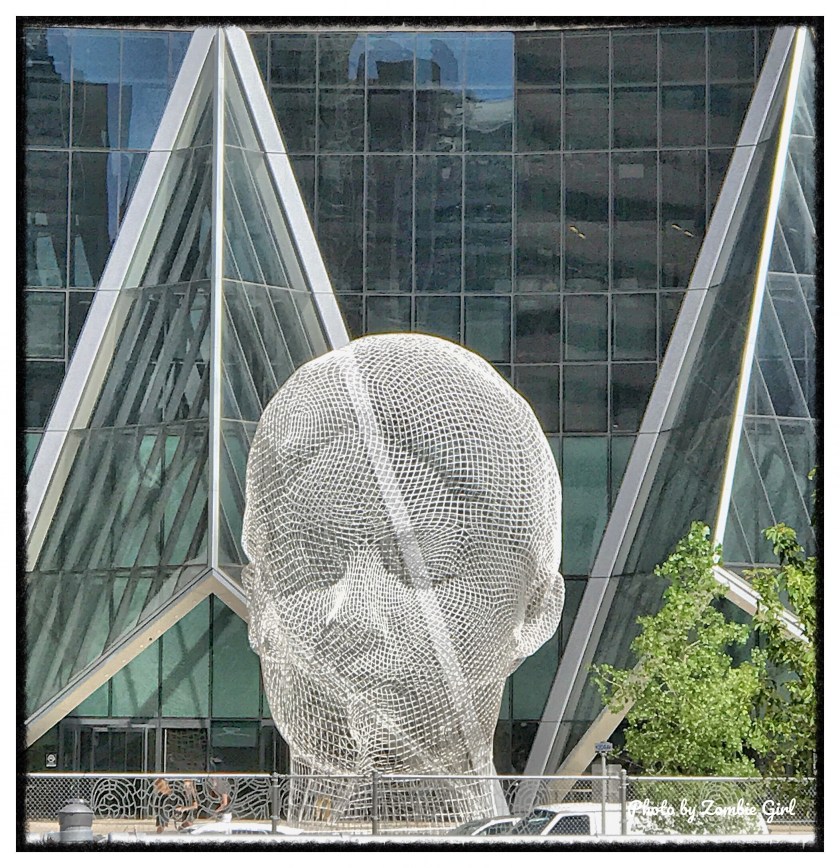
One of the most interesting artwork we spotted was the Wonderland sculpture in downtown Calgary. This is a huge wire structure of a human head which shows different faces, depending on the angle it’s viewed from. As it’s on the main route to most places, its definitely worth a quick visit.

The Wonderland sculpture in Calgary

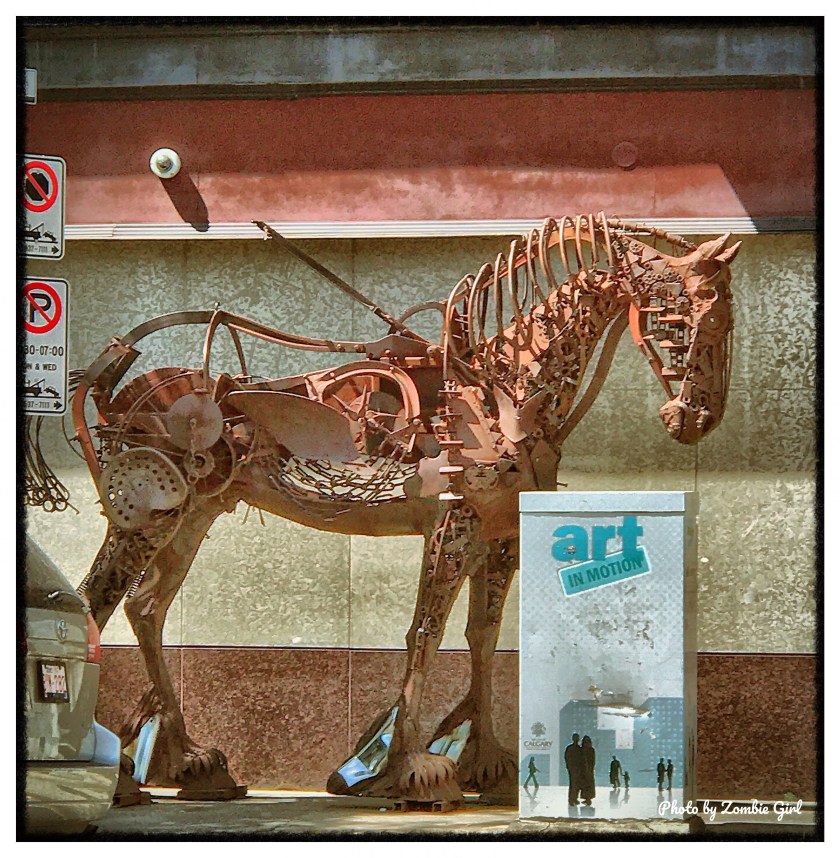
We stumbled on the metal horse sculpture as we were wandering through some of the shopping districts – it was great to see unique artwork in a public space and it created a talking point with other people who were stopping to look at the sculpture in more detail.

Metal horse sculpture in Calgary

It just goes to show that you don’t have to take a tour, pay lots of money or even have a specific destination in mind to get a feel for a new place. Sometimes, a simple wander around the local streets is all you need to discover some interesting sites and experiences.

When the place you discover by accident becomes one of the most beautiful places you have visited: Tioga Pass / Tenaya Lake

Most of you know by now that Yosemite is my favourite place in the world (so far!). You can read our posts on Mirror Lake and Camping for some background on our trips. I’m working my way up to a big post on the Half Dome hike – there is so much to share on this topic that it has been in progress for a while!

Around every corner is a stunning new view and the way the park has retained its ‘wildness’ just adds to its allure. Even after a couple of visits to the park, we have still found something new each time.

We just had to pull in to the side of the road for this view!

On our last trip, we were leaving Yosemite by a different exit, crossing Tioga Pass to make our way towards Death Valley. We had passed over Tioga Pass before, but we had done it at 2am in the thickness of night and therefore missed the views. This time, we were leaving Yosemite in the early morning and had enough light to see all of the sights on offer.

Tioga Pass is the highest highway pass in California and the Sierra Nevada. Due to its height, it’s usually the last road to open in summer and the first road to close in winter due to the ice and snow. On the journey, our ears were soon popping and the first time we made the trip, our bag of crisps burst open due to the altitude pressure: making us pull the car over, half in shock, half grateful that it wasn’t the gas canister for the camping stove!

The lake was like a perfect piece of paradise - we didn’t want to leave!

On this trip in the daylight, the trip probably took us twice as long as we stopped every ten minutes or so to pull over and admire the surroundings.

One place in particular really captured our attention: Tenaya Lake. Located at an elevation of 8,150 feet, this alpine lake is incredible. As we drove towards it in the car, both Wandering Beeb and I were lost for words, with “wow” being the only thing we had to say.

We weren’t expecting to see this glacial lake on our route through from Yosemite to Death Valley

Set back from the road, the little sandy beach and picnic table framed the water perfectly. The lake was formed by a glacier and the cliffs in the background stood out against the blue of the waters.

We didn’t know the lake was there, we hadn’t read any reviews and we certainly hadn’t built our route around visiting the lake. This was one of those occasions where going with the flow and meandering to our next destination had paid off, revealing a view we’d never intended to see and one that never left our minds.